What’s the Difference Between an Influencer Platform, Marketplace, and Agency?
Influencer marketing keeps growing and so do the solutions to manage it. With the global influencer marketing industry projected to reach USD 199.6 billion by 2032, growing at a CAGR of 28.6% from 2023 to 2032, brands now have more solutions than ever to choose from.
Whether you’re launching your first campaign or scaling an existing program, it’s easy to get lost in a sea of influencer agencies, marketplaces, and platforms — each promising efficiency, reach, or affordability.
But what’s the real difference between them? And which option fits your budget, team size, and goals best? We’re covering all of that in this article.
Key Takeaways
-
Influencer agencies handle everything for you but they’re the most expensive option.
-
Marketplaces let brands connect directly with influencers, often with no or low fees.
-
All-in-one influencer platforms automate discovery, management, and analytics in one place.
-
The best choice depends on your budget, internal resources, and campaign volume.
-
You can run influencer marketing effectively without hiring an agency by using affordable self-serve platforms.
Why Do Brands Outsource Influencer Marketing?
Running influencer campaigns in-house can be time-consuming. From researching creators and conducting outreach to building briefs, managing contracts, and tracking results, the process quickly adds up. That’s why many brands turn to external partners or platforms for support.
Outsourcing lets teams focus on strategy and creative direction while leveraging experts or technology to handle the heavy lifting. For brands looking to scale and collaborate with multiple creators, this support becomes invaluable.
Top 5 benefits of outsourcing influencer marketing
- Access to expertise: Agencies and platforms understand how to negotiate, brief, and manage creators efficiently.
- Saves time: Outsourcing eliminates hours of manual research and influencer outreach.
- Data-backed decisions: Many platforms offer performance dashboards and campaign analytics.
- Scalability: You can run multiple campaigns simultaneously without overloading your team.
- Access to vetted creators: Marketplaces curate influencers with verified metrics and audience insights. At Collabstr, we also offer free tools to see if influencers have fake followers or to check their engagement rates.
- TikTok Engagement Calculator
- Instagram Engagement Calculator
- TikTok Fake Follower Checker
- Instagram Fake Follower Checker
What Is an Influencer Marketing Agency?
An influencer marketing agency is a full-service partner that handles campaign strategy, influencer management, content review, and reporting from start to finish.

Typical services include:
-
Influencer research and selection
-
Creative briefing and content approvals
-
Contracting and negotiation
-
Campaign reporting and analytics
Working with influencer marketing agencies is ideal for brands that want a done-for-you solution, especially when launching high-profile or large-scale campaigns.
However, agencies come at a premium cost. Campaigns can range anywhere from $10,000 to over $100,000, depending on deliverables, influencer tiers, and management fees. That’s why many small businesses look for alternatives to hiring an influencer agency.
Alternatives to hiring an influencer agency
Many brands want to know how to run influencer marketing without an agency. Fortunately, there are now plenty of flexible, low-cost alternatives available.
Here are three main approaches:
-
Influencer marketplaces: Connect directly with creators and manage the collaboration yourself.
-
All-in-one influencer platforms: Automate discovery, outreach, and reporting in a single dashboard.
-
Hybrid tools: Some platforms combine self-serve software with optional managed services.
Let’s dig into these influencer marketing solutions, shall we?
Influencer Marketing Platforms vs. Influencer Marketplaces
While influencer platforms and marketplaces often get lumped together, they serve distinct purposes — and some solutions now combine the best of both worlds.
|
Feature |
Influencer Platform |
Influencer Marketplace |
Hybrid Options |
|
Definition |
Software for managing influencer campaigns end-to-end (discovery, outreach, analytics) |
A hub where brands and influencers connect directly |
Some solutions, like Collabstr, combine both: a marketplace plus management tools |
|
Best for |
Teams running recurring campaigns, needing automation and analytics |
Startups or small brands testing influencer marketing |
Hybrid platforms work for both small and scaling teams |
|
Pricing |
Usually subscription-based |
Often pay-per-collaboration, sometimes free |
Hybrid platforms may offer flexible pricing (subscription + per-collaboration) |
|
Level of support |
Automated workflows, CRM, analytics |
Self-serve; limited support |
Hybrid platforms often include optional managed support |
|
Example use case |
Scaling multiple campaigns with data-driven insights |
Booking one-off collaborations |
Platforms like Collabstr let you do both efficiently |
What are the top Influencer marketing platforms?
If you’re looking for a powerful all-in-one influencer platform, prioritize features like creator search, outreach automation, campaign management, and analytics.
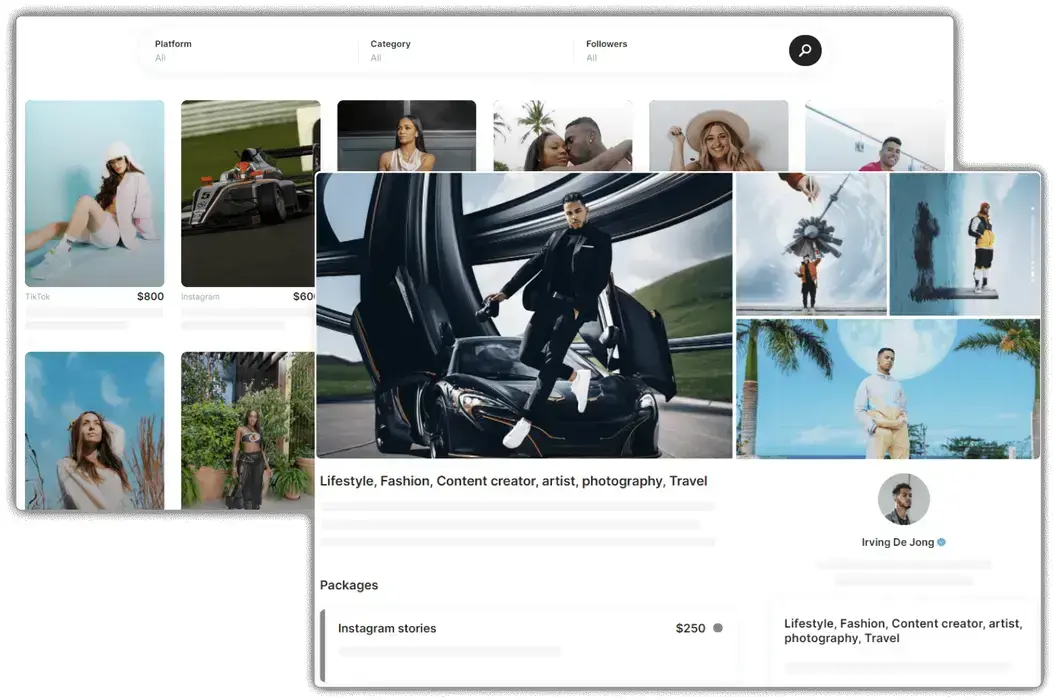
Some of the top influencer platforms in 2025 include:
-
Collabstr – The best all-in-one influencer platform built for startups and small brands. Start searching without even making an account!
-
Aspire – Comprehensive influencer marketing software for larger ecommerce teams.
-
GRIN – Enterprise-level solution that integrates with ecommerce and CRM tools.
Each has different strengths depending on your brand’s goals, scale, and budget.
What Are Low-Cost Influencer Marketing Options?
If you’re working with a limited budget or want to test the waters first, there are several low-cost influencer marketing options that still deliver high ROI.
-
Micro-influencer collaborations: Partner with micro influencers (10,000–100,000 followers) who have higher engagement and lower rates (an average of $198 per collaboration).
-
Influencer marketplaces: Tools like Collabstr, Trend.io, and Influencity allow you to find and hire influencers directly, without large upfront costs or agency retainers.
-
Product gifting campaigns: Instead of paid collaborations, offer free products in exchange for honest content and reviews.
-
Affiliate-based partnerships: Pay influencers per sale or lead, reducing upfront expenses.
-
UGC (User-Generated Content) creators: Hire creators to produce branded content that you can reuse in ads and social media. Many brands are turning to UGC creators due to their affordability.
These methods are perfect for startups, DTC brands, and small businesses that want to experiment with influencer marketing before committing to larger budgets.
Frequently Asked Questions
What is the best influencer marketplace for startups?
Platforms like Collabstr are designed for startups — offering transparent pricing, verified creators, and no monthly fees. You only pay when you book an influencer, making it ideal for small budgets.
Are there influencer marketplaces that don’t charge fees?
Yes. Some influencer marketplaces let brands browse and contact creators for free. Others charge a small transaction fee (usually under 10%) to cover secure payment and platform protection.
How can I run influencer marketing without an agency?
Use a self-serve influencer marketplace or platform. These tools help you find, manage, and pay influencers directly — giving you control and cost savings while still offering automation and analytics.