
How to Track Influencer Campaign ROI
Influencer marketing can be a game-changer for brands—but only if you know how to measure the ROI of your influencer campaigns. Without proper tracking, even high-performing campaigns can feel like a black box. Collabstr’s influencer marketplace simplifies this process by helping brands source, manage, and evaluate influencer content efficiently.
In this article, we’ll explore how influencer content drives ROI, the key metrics to track influencer performance and formulas to determine ROI, and how Collabstr’s features make it easier to measure and optimize your campaigns.
Key Takeaways
-
On average, influencer marketing campaigns earn $5.78 for every dollar spent, with some seeing as much as $18. Measuring ROI is crucial for benchmarking your business, setting goals, and improving performance.
-
Tracking metrics like engagement rate, conversions, and traffic is crucial to understand your influencer campaign effectiveness—what’s going right and what’s going wrong.
-
Collabstr provides a centralized influencer marketing analytics platform to source content creators and track their performance.
-
Measuring ROI involves combining revenue generated with campaign costs, factoring in metrics like reach and engagement.
How Does Influencer Content Drive ROI?
Influencer campaigns work because they leverage trust and reach. Unlike traditional ads, influencer content often generates higher engagement due to authenticity and relatability.
Micro-influencers, in particular, are known for driving incredible ROI for businesses. While they have smaller audiences, they’re highly engaged, offering 2-3x engagement than macro or mega influencers. According to recent research, micro-influencers yield, on average, a return of over $1000 a post.
When measuring ROI, it’s important to understand how influencer content contributes to your broader marketing goals:
-
Brand Awareness: Impressions and reach show your brand’s exposure to new audiences.
-
Engagement: Likes, comments, and shares reflect how well content resonates.
-
Conversions: Click-throughs, sign-ups, or purchases directly measure revenue impact.
By identifying which content and influencers drive these outcomes, you can refine your campaigns and maximize your marketing spend.
How to Track Influencer ROI: Key Metrics
To measure the ROI of influencer marketing campaigns, tracking the right metrics is essential. Here’s a breakdown of key performance indicators:

-
Engagement Rate: Engagement (likes, comments, shares, saves) divided by total followers measures how well the influencer’s content resonates with their audience. High engagement often correlates with higher conversion potential. Found a content creator you want to work with? Try Collabstr’s free TikTok Engagement Rate Calculator or Instagram Engagement Rate Calculator.
-
Reach and Impressions: Reach shows how many unique users see the content, while impressions measure total views. These metrics help quantify awareness generated by influencer campaigns.
-
Click-Through Rate (CTR): CTR measures how many users click links in influencer posts. Tracking CTR is crucial for campaigns aiming to drive traffic to websites or landing pages.
-
Conversions: Conversions track the number of users completing a desired action—like signing up for a newsletter or making a purchase—after engaging with influencer content.
-
Cost Per Acquisition (CPA): CPA calculates how much each conversion costs relative to your campaign budget. Lower CPA indicates higher efficiency and ROI.
Tracking these metrics over time allows you to identify high-performing influencers, content types, and messaging strategies, making it easier to justify marketing spend and optimize future campaigns.
How Do You Calculate Influencer ROI?
Measuring ROI doesn’t have to be complicated. Here’s a simple formula to calculate influencer ROI:
ROI (%) = (Revenue from Campaign − Campaign Costs) ÷ Campaign Costs × 100
For example, if your revenue from the campaign was $15,000 and the campaign costs were $5,000, here’s how we would calculate it:
(15,000 - 5,000) ÷ 5,000 x 100 = 200%
This example shows that every dollar spent generated two dollars in profit.
Pro tip: You can also calculate ROI per influencer or per content asset to see which partnerships are driving the most value.
What’s the Best Influencer Marketing Tools for Tracking ROI?
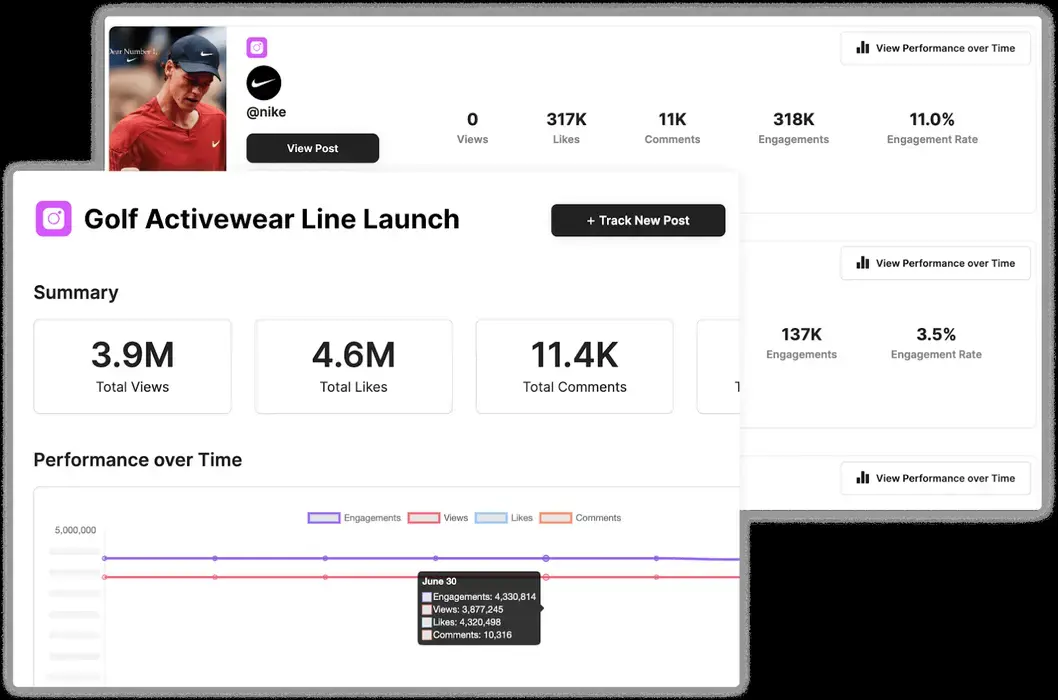
Collabstr is the go-to influencer analytics platform for brands, offering robust reporting and real-time tracking to measure ROI easily and efficiently.
In one dashboard, brands can view key metrics like impressions and engagement. Metrics are updated every 24 hours, so you always have the latest performance data. But if you want to view performance over time, you can do that, too, with a click of a button.
Software for measuring influencer ROI: feature guide
Wondering how to start tracking ROI using influencer marketing software? If this is your first time managing and tracking influencer marketing yourself, this guide will be super valuable!
Below is a rundown of the key features you should look out for choosing software, with tracking and analytics in mind.
-
Centralized Influencer Discovery: Choosing the right influencers is crucial to ensure you work with creators who can deliver measurable results. Collabstr allows brands to search for influencers based on niche, audience size, and engagement metrics.
-
Campaign Management Tools: It’s hard to scale your influencer marketing program if you’re working in spreadsheets and email threads. It also fragments your data, leading to poor tracking and reporting. Influencer marketing tools with campaign management features are essential for staying on top of every aspect of your campaigns.
-
Analytics Dashboard: This feature is a must-have if you’re focused on tracking influencer ROI! Monitor metrics like impressions, engagement, clicks, and conversions in real time. Collabstr’s dashboard helps brands see which influencers and content pieces are driving the most ROI.
-
Content Repurposing: Once you identify the content delivering the highest returns, you should squeeze out all of the value! High-performing content can be repurposed for ads, social campaigns, or website use, amplifying ROI beyond the original post.
-
Automated Reporting: Building reports manually can take hours! Collabstr provides shareable reports that summarize performance metrics, making it easy to communicate results to stakeholders.
TL;DR
Measuring the ROI of influencer marketing campaigns doesn’t have to be overwhelming. By tracking key metrics, using software tools like Collabstr, and repurposing high-performing content, brands can make data-driven decisions that maximize results. Whether you’re a marketing agency managing multiple clients or a brand running your first influencer campaign, following these steps ensures every dollar spent contributes to measurable growth.

Frequently Asked Questions: Campaign Optimization
Once my campaigns are running, what’s the next step?
After launching campaigns and setting up tracking, the next step is optimization—making sure every piece of content and every influencer delivers maximum ROI.
How can I test which content formats perform best?
Compare videos, static posts, and stories to see which formats generate the most engagement. This helps you focus on content that resonates with your audience.
How do I analyze influencer performance effectively?
Look at each influencer’s results—engagement, conversions, and traffic—to identify top performers. Consider building long-term partnerships with creators who consistently drive results.
What’s the best way to track traffic and conversions from influencer posts?
Use UTM parameters on all influencer links. This lets you see exactly which posts are driving clicks, conversions, and revenue.
How do I stay ahead of trends in influencer marketing?
Monitor trending hashtags, content formats, and audience behavior. Keeping an eye on trends helps you adapt quickly and stay competitive.