Instagram Influencer Marketing: What It Costs in 2026
- Key Takeaways
- Instagram Influencer Marketing Has a Price Problem, and It Isn't What You Think
- What Instagram Influencer Marketing Actually Costs, by Niche
- Why Instagram Still Works, In Real Engagement Terms
- How to Find and Vet the Right Instagram Creators
- How to Measure the Return
- The Wider Market Backdrop
- Frequently Asked Questions
- Start From the Real Numbers
Key Takeaways
-
The average brand pays $193 for an Instagram creator collaboration, with posted rates averaging $214. Instagram is the second most expensive platform to book, behind YouTube and ahead of TikTok.
-
Instagram is also the most-used platform for influencer campaigns, 40% of all campaigns in our 2026 report. So it is both the biggest supply of creators and among the priciest to book.
-
It isn't only for big budgets. In the largest consumer niches the smallest creators are very affordable, and nearly 80% of all collaborations cost under $300, so the same channel scales from a first test to a national program.
-
Price is a niche decision, not an Instagram decision. Influencer collaboration pricing runs from $210 in the most affordable niches to more than $300 in the expertise-driven ones.
-
The channel works on trust, not follower count. 83% say influencer content outperforms brand content across reach, engagement, and conversion (Sprout Social) and audiences increasingly weight creator recommendations over ads.
-
Crossing 100,000 followers is the single largest jump in creator price. Moving a brief from micro to mid creators doubles the cost of collaboration.
Instagram Influencer Marketing Has a Price Problem, and It Isn't What You Think
Instagram influencer marketing is the practice of paying Instagram creators to make and post content for a brand, usually a Reel, a Story, or a feed post. The tactic is well understood. The pricing isn't. Almost every guide that ranks for this topic answers the first question a brand asks, "what does it cost," with a figure borrowed from a third-party survey rather than a real transaction.
We can answer it with real ones. Collabstr is a creator marketplace, so the rates below come from completed, paid collaborations between brands and creators, not estimates or rate-card wishes.
Here's the finding that surprises most brands: Instagram isn't the cheap option. Creators set their own prices, and on Instagram the average listed price is $214. After the usual negotiation on scope and budget, the average a brand actually pays is $193, according to Collabstr's 2026 Influencer Marketing Report. That paid price, not the sticker price, is what we mean by cost throughout this piece. And $193 places Instagram second among the platforms we track, behind YouTube at $255 and ahead of TikTok at $186, user-generated content at $154, and X at $76. So if you've been treating Instagram as the cheap, default option, the rates say otherwise: it is second only to YouTube, and well above everything else.
Here is the full set, listed price against what brands actually paid:
| Platform | Posted price | Average paid |
|---|---|---|
| YouTube | $311 | $255 |
| $214 | $193 | |
| TikTok | $182 | $186 |
| UGC | $180 | $154 |
| Twitch | $398 | $127 |
| Amazon | $193 | $88 |
| X | $179 | $76 |
Source: Collabstr 2026 Influencer Marketing Report, covering collaborations in 2025. Posted price is what creators list on their profile; average paid is the final negotiated cost to the brand.
TikTok is the only platform where the average paid comes in above the listed price, so a TikTok quote leaves you little to negotiate. Instagram sits 10% below its listed price, which is close to the middle of the range.
This isn't a small or fringe corner of the market either. Instagram is the most-used platform for influencer campaigns, accounting for 40% of all campaigns in our 2026 report, ahead of platform-agnostic UGC at 35% and TikTok at 21%. So Instagram is at once the deepest pool of creators to hire from and one of the most expensive to book, which is exactly why knowing the real rate matters before you plan a budget.
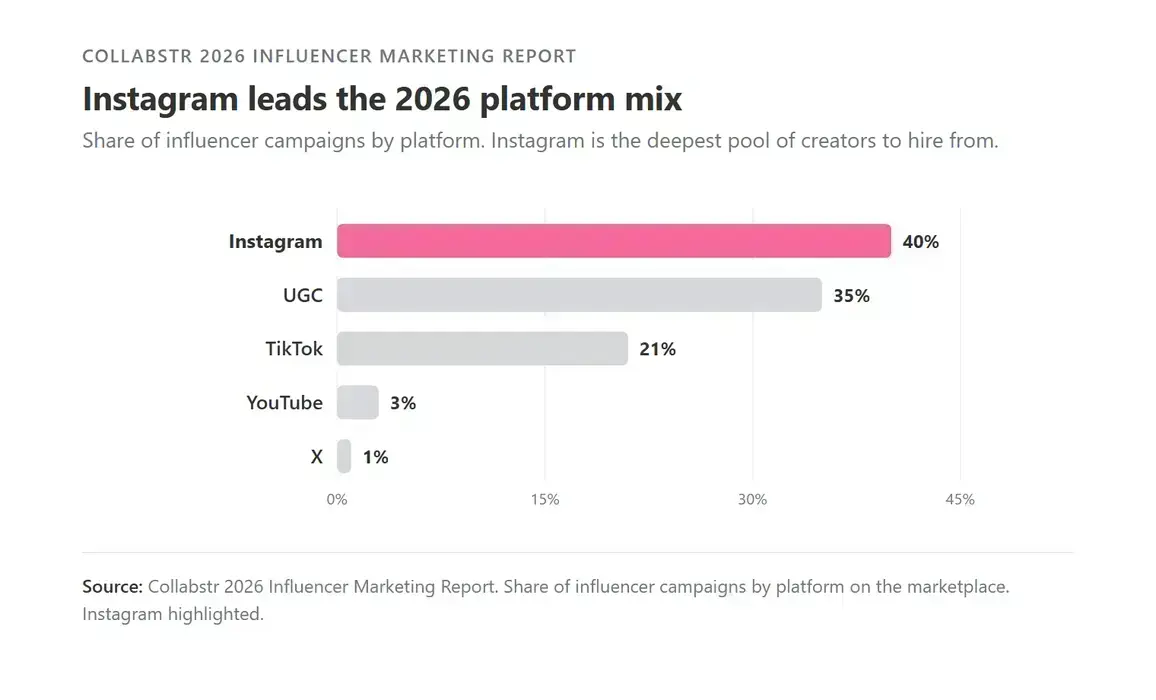
Share of influencer campaigns by platform, 2026. Collabstr 2026 Influencer Marketing Report.
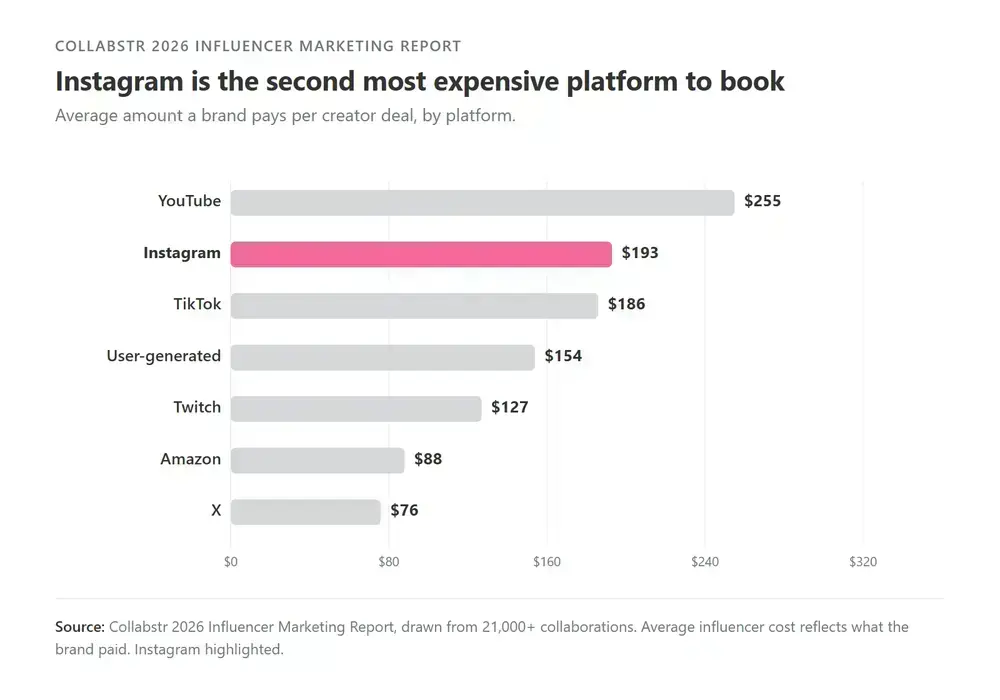
Average amount a brand pays per creator collaboration, by platform. Collabstr 2026 Influencer Marketing Report.
The second finding matters more for how you budget. The channel isn't reserved for brands with five figures to spend. In the largest consumer niches the smallest creators are inexpensive to book, and nearly 80% of all collaborations on the marketplace, including Instagram, cost under $300 . The same platform that lists a celebrity profile at the top of the range also lists a working beauty creator at the very bottom of it. Instagram influencer marketing scales down as cleanly as it scales up, which is the opposite of how it is usually described.
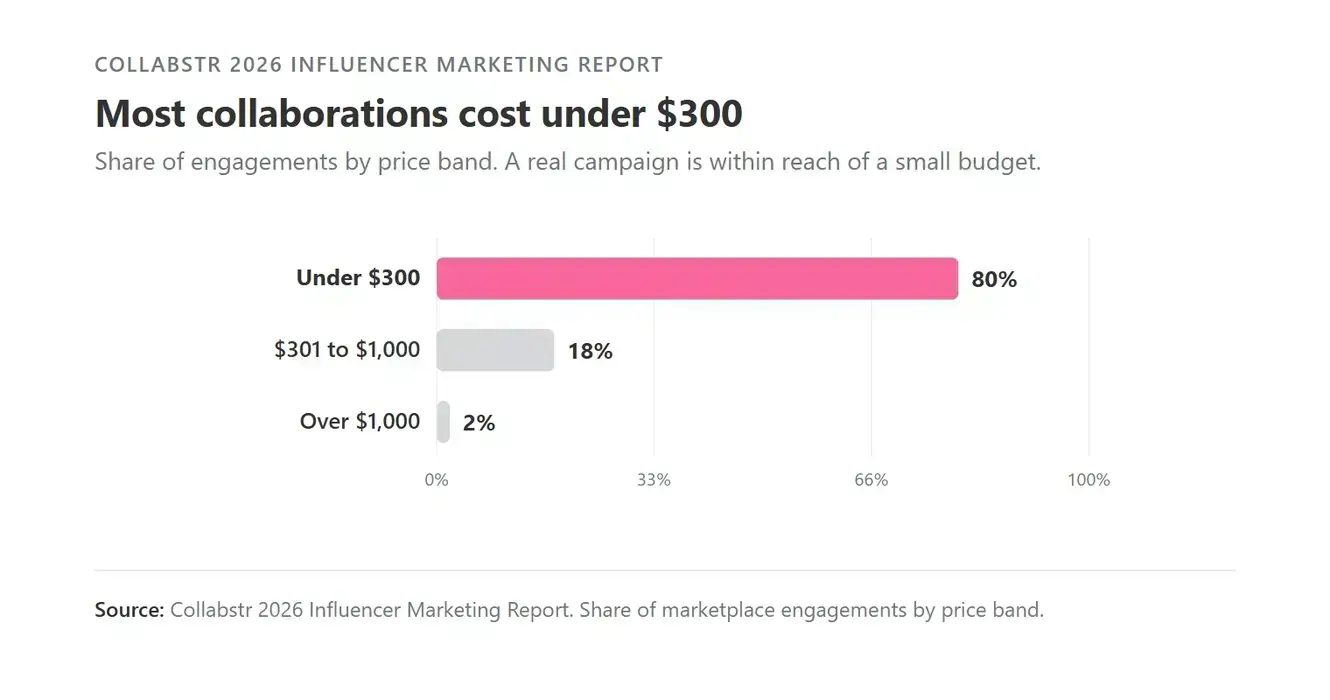
Share of marketplace engagements by price band. Collabstr 2026 Influencer Marketing Report.
What Instagram Influencer Marketing Actually Costs, by Niche
The single platform average hides the number you actually need, which is the rate in your category. Price is far more a niche decision than an Instagram one. In our 2026 report, the most affordable niches are the high-supply consumer categories, where many creators compete and content is quick to produce:
-
Beauty, $210
-
Cannabis and gaming, $214
-
Fashion, $217
-
Athlete and sports, $233
The most expensive niches are the expertise-driven categories, where the audience is smaller but higher-intent and closer to a purchase:
-
Skilled trades, $309
-
Education, $307
-
Entrepreneur and business, $295
-
Comedy and entertainment, $292
-
Adventure and outdoors, $274
These are the five most and least expensive niches in the 2026 report, across every platform rather than Instagram alone:
| Most affordable niches | Average | Most expensive niches | Average |
|---|---|---|---|
| Beauty | $210 | Skilled Trades | $309 |
| Cannabis | $214 | Education | $307 |
| Gaming | $214 | Entrepreneur and Business | $295 |
| Fashion | $217 | Comedy and Entertainment | $292 |
| Athlete and Sports | $233 | Adventure and Outdoors | $274 |
Source: Collabstr 2026 Influencer Marketing Report. Averages cover collaborations across all platforms, not Instagram alone.
The spread is about $100 a collaboration, which is wider than the gap between Instagram and TikTok. A beauty brand and a trades brand running the same brief on the same platform should expect different quotes.
These are average creator rates across the marketplace, from the 2026 report, and Instagram is the largest single slice of that activity. The practical takeaway is that "how much does Instagram influencer marketing cost" has no single answer. It costs what your niche costs. Most consumer niches sit in a $200 to $250 band, and nearly 80% of all collaborations come in under $300, so a real campaign is within reach of a small budget. One caution before you budget to the dollar: rates move over time, so plan around the band your niche sits in rather than a single figure.
Why Instagram Still Works, In Real Engagement Terms
Most guides justify Instagram with a borrowed industry statistic about purchases. The stronger case is about trust. In 2025, 61% of consumers said they trust influencer endorsements more than traditional advertisements, and in Sprout Social's Pulse Survey 83% of respondents said influencer content outperformed brand content across reach, engagement, and conversion. Instagram content sits inside the feed the way an ad never can, which is a large part of why the channel holds its place in a media plan even as its per-collaboration price sits above TikTok.
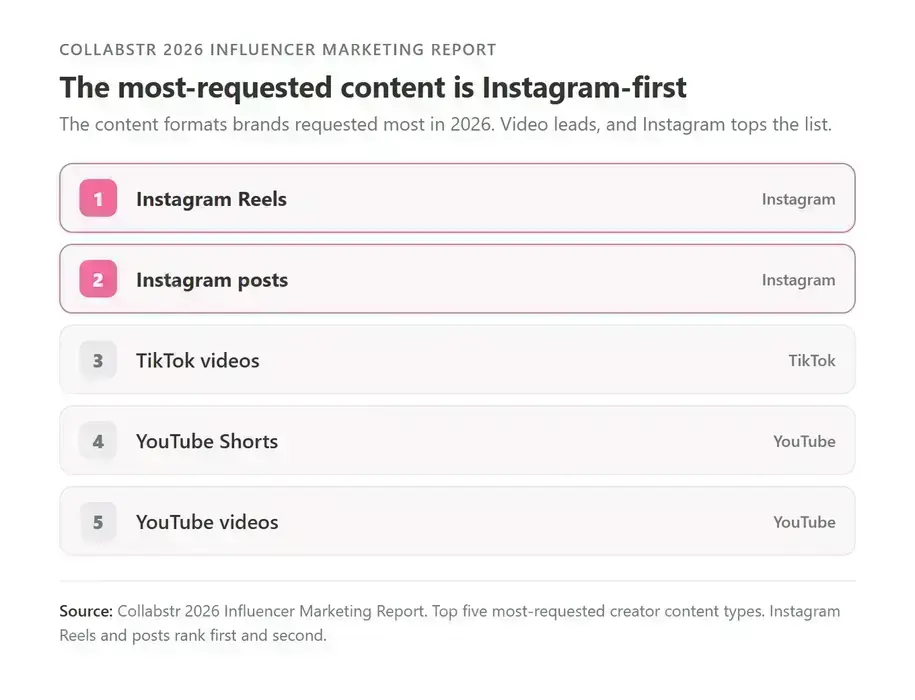
The most-requested creator content formats, 2026. Collabstr 2026 Influencer Marketing Report.
When you screen creators, engagement on the profile is still the number to check. Compare a creator against others in the same niche rather than an absolute target. A profile with heavy followers but few comments, or engagement far below its peers, has a soft or bought audience.
How to Find and Vet the Right Instagram Creators
The rates above only help if the creator is real. Three steps keep a program honest.
Start with the tier, not the follower count when finding influencers. Decide whether you're buying reach, which points you to mid and macro creators, or volume and engagement, which points you to micro and nano. The rate ladder above tells you what each choice costs before you commit.
Check engagement against the niche benchmark. If a creator in a niche that usually runs in the mid-single digits is posting 1% engagement, the audience is soft or bought. If the number is wildly high with few comments, treat it the same way. The benchmark is your fake-follower filter.
Then hire in a way that protects you. On Collabstr, prices are shown before you hire, the platform fees are published up front, payment is held and released only when you approve the work, and you can hire creators in minutes rather than running an agency search. That structure removes the two risks that make brands hesitate on Instagram: paying before seeing the work, and not knowing the price until a sales call.
How to Measure the Return
Purchase attribution is weak across the whole influencer channel, so anchor measurement on the metrics that hold up. The most useful planning number is projected CPM, the cost per thousand views a creator's audience implies, shown on their profile before you hire. It is a projection rather than an achieved result, so read it as a way to compare creators on a common basis, and pair it with verified engagement to size a shortlist on evidence rather than follower count.
Track three things and you'll know whether a campaign worked: verified engagement against the niche benchmark, CPM against your other paid channels, and the reusability of the content. That last point is underrated. A Reel or a Story is an asset you can run as a paid ad afterward, which means an Instagram collaboration often buys media inventory, not just a single post. For the full process, see our guide to influencer marketing measurement.
The Wider Market Backdrop
None of this sits still. HypeAuditor estimates the global influencer market will reach $31 billion by 2027, and our 2026 report shows the money shifting toward affordable, high-frequency work: UGC campaigns grew 133% year over year while nearly 80% of collaborations now cost under $300. A large share of that spend moves through Instagram on the strength of habit. The brands that plan against real rates and the tier ladder, rather than a single borrowed cost figure, are the ones that will spend it well.
Frequently Asked Questions
How much does Instagram influencer marketing cost?
The average brand pays $193 for an Instagram collaboration, with posted rates of $214. The useful number is your niche rate, which runs from $210 in the most affordable categories to more than $300 in expertise-driven ones, and nearly 80% of all collaborations cost under $300.
Is Instagram cheaper than TikTok or YouTube?
Instagram sits near the top. At $193 per collaboration it is more expensive than TikTok, at $186, and cheaper than YouTube, at $255.
What is a good engagement rate on Instagram?
Engagement varies by niche, but the top niches typically run in the mid-single digits on the profile. Compare a creator against that benchmark; anything far below it is a signal to check audience quality.
How many followers should a creator have?
It depends on the goal. Crossing 100,000 followers doubles the price, so micro and nano creators are the efficient choice for volume, while mid and macro creators buy reach at a premium.
How do I avoid fake or low-quality influencers?
Compare a creator's engagement to the niche benchmark, favor verified profiles, and use a platform that holds payment until you approve the delivered work.
Can I reuse the content in ads?
Often yes, and it is one of the strongest reasons to book on Instagram. Confirm usage rights before hiring, then run the Reel or Story as paid media.
Start From the Real Numbers
Instagram influencer marketing has a clear price for every niche and tier, and now you have those numbers. It scales from a small nano test to a national program, and the rate you pay is mostly a choice of niche and creator size. The next step is to see live rates for your category and book a creator directly.
Methodology: Platform and niche figures are from Collabstr's 2026 Influencer Marketing Report, which analyzed more than 21,000 collaborations and over 200,000 creators. Average influencer cost reflects what the brand paid; posted rates reflect what creators listed. The follower-tier ladder is average creator payout after fees in the beauty niche over the last 12 months, shown as a representative structure. External projection: HypeAuditor. Consumer-trust figures: Sprout Social, 2025.