Best Influencer Marketing Software: What to Look For in 2026
Choosing the best influencer marketing software has become a defining factor in how brands scale creator campaigns in 2026. With more tools, more AI automation, and higher expectations for ROI, brands need a clear framework for identifying which platform actually fits their needs, not just the most expensive or the loudest in the market.
Key Takeaways
-
The best influencer marketing tools in 2026 pair AI-powered discovery, end-to-end workflow management, and transparent ROI tracking.
-
Enterprise platforms like CreatorIQ and GRIN remain strong choices for big brands, but teams driving micro-influencer campaigns often get better results with simpler, more flexible software like Collabstr.
-
Costs vary widely, with influencer platforms ranging from $0 to $200k+ annually depending on seats, features, and usage limits.
-
To choose the right tool, brands should prioritize data accuracy, ease of use, and integration with existing systems.
What is Influencer Marketing Software?
Influencer marketing software helps brands discover creators, manage partnerships, and measure campaign performance. In 2026, the category has evolved into a blend of creator CRM, campaign management, AI insights, and reporting tools—replacing spreadsheets, manual research, and disconnected workflows.
Key features to look for
When brands compare influencer marketing tools, these are the features that consistently define the top-performing platforms:
-
Influencer discovery and audience insights
-
Campaign management and workflow automation
-
Creator relationship management (CRM)
-
Advanced reporting and ROI tools
-
Payments and contracting
-
Integrations for ecommerce, CRM, affiliate, content storage, and analytics platforms
These features collectively determine whether a platform can support modern influencer marketing strategies and workstreams.
Why brands use it
Brands invest in influencer marketing software for three core reasons:
-
Scale: Running hundreds of creator partnerships at once becomes impossible manually.
-
Accuracy: Tools provide audience data, influencer validity checks, and performance insights that outperform manual research.
-
ROI: Teams need clear reporting to justify budget and optimize campaigns.

This is why brands are concerned about finding the best options for influencer marketing tools. Influencer marketing is becoming a key marketing arm for organizations, so it’s crucial to get the most effective tools to hit their goals.
Comparing Influencer Marketing Tools
With so many options, the challenge isn’t finding influencer platforms—it’s knowing how to compare them. These are the criteria brands rely on most in 2026.
Features vs. usability
A common mistake is choosing the “most powerful” tool on paper. Many enterprise platforms are feature-heavy but overly complex, requiring long onboarding and dedicated account owners.
Key comparison questions:
-
Can non-technical team members use it easily?
-
Are workflows intuitive?
-
Does your team actually need all the features?
Usability has become one of the biggest factors brands weigh when searching for the best influencer marketing tool.
Integration and automation
The best influencer marketing software automates as much of the campaign lifecycle as possible, including:
-
Auto-generated briefs
-
Performance tracking refreshed automatically
-
Payment automation
-
Integration with ecommerce, CRM, and analytics tools
Brands comparing influencer tools increasingly prioritize integrations because disconnected systems slow everything down.
ROI and analytics
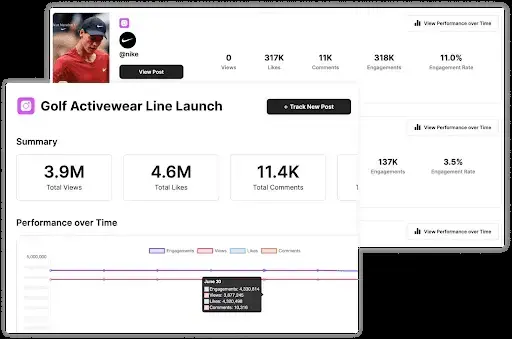
Analytics have become the defining feature separating top tools from mid-tier options. Leading platforms now provide:
-
Content-level performance (automatically refreshed daily)
-
Attribution modeling
-
Cross-platform analytics
-
ROI dashboards
-
Revenue and sales tracking
These capabilities allow teams to measure true effectiveness and make smarter decisions across channels.
Large vs. small brand needs
Large brands benefit from enterprise tools because they offer:
-
Strict approval workflows
-
Large team seats
-
Advanced data governance
-
Complex reporting
Small brands often prefer lighter-weight tools with:
-
Open creator marketplaces
-
Simple workflows
-
Affordable plans
-
Quick onboarding
Best Options for Influencer Marketing Tools
The most widely used and consistently recommended platforms for influencer programs in 2026 include a range of options depending on brand size and campaign focus. Collabstr’s influencer marketing software is particularly well-suited for brands running micro-influencer or UGC campaigns, offering easy onboarding and streamlined workflows.
For big brands driving macro-influencer campaigns
If you’re a big brand with a large budget for influencer marketing, the world is your oyster! Below are the go-to options for large organizations:
-
CreatorIQ — For enterprise analytics and governance
-
GRIN — For ecommerce brands and creator management
-
Upfluence — For all-in-one features with CRM and search
-
Aspire — For UGC, creator marketplaces, and workflow automation
For small brands driving micro-influencer campaigns
If you’re a small brand searching for free alternatives to CreatorIQ, GRIN, Upfluence, and Aspire, here are some free options:
-
Heepsy
-
HypeAuditor (limited free tools)
-
Influence.co
-
Klear (limited features)
-
Modash (trial and limited search)
These tools provide basic influencer discovery and vetting but often lack advanced automation, payments, and reporting. For small brands looking for the best platforms for micro-influencer campaigns, Collabstr stands out—offering not only cost-effective pricing but also robust, all-in-one features that deliver real value for running efficient and successful campaigns.
Start searching for micro-influencers or UGC influencers for free now!
Cost comparison of influencer marketing tools
Influencer marketing software pricing varies dramatically:
-
Enterprise platforms: $60,000–$250,000+ per year
-
Mid-market tools: $6,000–$30,000 per year
-
Freemium or entry-level tools: $0–$300 per month
Costs depend on:
-
Seats
-
Campaign volume
-
Access to analytics
-
Usage limits
-
Support level
If cost plays a major role in your decision, we recommend looking at this robust influencer marketing cost breakdown. Additionally, Collabstr’s free influencer price calculator may be helpful for budgeting this year!
Final Checklist for Brands
Before committing to an influencer marketing platform, ask yourself:
-
Does it have accurate, verified creator data?
-
Does it support your campaign style (micro, nano, UGC, ambassador, paid partnerships)?
-
Can your team adopt it quickly?
-
Does it integrate with your ecommerce, CRM, and reporting tools?
-
Does the pricing model match your growth plans?
-
Does it offer the level of analytics your leadership team expects?
If the answer is “yes” across these questions, the tool is likely a strong fit.
TL;DR
The best influencer marketing software in 2026 combines robust discovery tools, automated workflows, and advanced ROI tracking. For small brands or organizations with leaner budgets, Collabstr stands out for its cost-effectiveness and all-in-one features. Enterprise-grade options like CreatorIQ and Aspire offer advanced analytics and scalability, while free tools such as Heepsy provide basic discovery and vetting. Choose software that fits your workflow, integrates with your existing systems, and supports long-term growth.

Influencer Marketing Software: Frequently Asked Questions
What is the best influencer marketing software in 2026?
The “best” tool depends on your brand’s needs, but for companies working with leaner budgets, Collabstr stands out—offering the right balance of cost, features, and access to high-quality influencer talent.
What’s the most cost-effective influencer marketing tool?
For cost efficiency, mid-tier or marketplace-based platforms often deliver the strongest balance of price and automation.
Are free influencer marketing tools worth using?
Free tools are helpful for discovery and early testing but lack the automation, payments, and analytics needed to scale.