Micro Influencer UGC and Campaign Playbook for Small Businesses
More and more companies are replacing expensive celebrity endorsements with authentic user-generated content (UGC) from micro-influencers. Why? Micro-influencers are cost-effective, relatable, and great at building trust with niche audiences.
When paired with the right influencer marketing platforms, they can deliver even bigger results. But what are the best influencer marketing tools for UGC that actually work for small business goals and budgets? That’s a question we’ll help you answer today.
At Collabstr, we’ve helped thousands of small businesses bring their campaigns to life—and know a thing or two about working with micro-influencers. This playbook covers everything you need to know from how to find micro-influencers to which UGC marketplaces and influencer marketing tools are most effective for small business campaigns.
Key Takeaways: Working with Micro-Influencers as a Small Business
-
Micro-influencers (10K–100K followers) average just $198 per post, making them perfect for small business budgets.
-
Micro-influencers often deliver higher engagement rates—sometimes 2–3x those of celebrity accounts.
-
Influencer marketing software helps small brands discover UGC creators, build campaigns, and track ROI.
-
UGC from micro-influencers can boost consumer behavior, trust, and engagement.
Advantages of Working with Micro-Influencers
If you’re reading this guide, you already know that influencer marketing is no longer just about follower count—it’s also about audience trust and content quality.
That’s why micro-influencers are the go-to choice for small businesses focused on ROI. They’re affordable, approachable, and their audiences actually listen.
Why micro-influencers work:
-
More relatable = higher trust
-
Stronger engagement rates
-
Easier to collaborate with
-
Cost-effective UGC creation
-
High-performing content for paid ads
Influencer Campaign Playbook for Small Businesses
Discover how small businesses can run influencer campaigns that get results. This playbook covers best practices, strategy, creator selection, and proven ways to turn engagement into sales.
Micro-Influencers vs. Macro Influencers for UGC Campaigns
User-generated content (UGC) works best when it feels real, which is why micro-influencers are a better fit than celebrities or macro creators. Their content is more relatable, more trusted, and, good news, more affordable.
Micro-influencers average $198 per collaboration, offering strong ROI and 2–3x higher engagement than macro influencers. In this MIT Sloan Management Review post, they report that micro-influencers yield, on average, a return of over $1000 for a post.
Why? Their niche audiences respond better to authentic content, making them ideal for UGC and conversion-driven campaigns.
Celebrities may drive mass awareness, but often at a much higher cost and with lower engagement. For small businesses, working with UGC creators with niche audiences deliver better trust, stronger content, and greater value across the board.

What are Best Practices for Using Micro-Influencers in a Campaign?
To get the most out of your UGC campaign, it’s not just about choosing micro-influencers, it’s about using them strategically. Small businesses often see the best results when they activate multiple micro-influencers across different niche audiences, rather than relying on a single macro creator. This approach increases engagement, lowers cost per result, and delivers more versatile content you can repurpose across channels.
-
Work with 5–10 creators per campaign to maximize reach and UGC output without overspending.
-
Segment your creators by audience niche (e.g., beauty, wellness, fitness) to reach relevant communities and test messaging variations.
-
Give creators creative flexibility—UGC performs best when it feels native to their style, not overly scripted.
-
Use clear briefs and shared KPIs to align on goals like engagement, website visits, or conversions.
-
Request usage rights up front so you can repurpose top-performing content in ads, emails, and product pages.
-
Track performance by creator to identify which influencers drive the highest ROI and brand lift.
This multi-creator strategy not only spreads your message across diverse audiences, it also helps you build a library of authentic UGC that you can reuse well beyond the campaign. Plus, it lowers risk. If one influencer underperforms, others can make up the difference.
Setting a Budget Efficiently
Before launching a campaign, it’s important to set a realistic budget. Tools like Collabstr’s Influencer Price Cost Calculator can help you do that! It will provide some clarity by factoring in:
-
Platform: For example, Instagram Reels ($288 avg) often cost more than TikTok videos ($217 avg) due to algorithmic reach and production effort.
-
Niche: Niches like lifestyle, beauty, and family command higher rates because they've built highly engaged, loyal communities around specific interests or identities.
-
Follower count: As we’ve shared, celebrities and macro-influencers charge much more per campaign.
Other factors that you should consider are:
-
Content type: Static images usually cost less than short-form videos or Stories that require editing, scripting, or voiceover.
-
Engagement rate: Creators with highly engaged audiences may charge more, but offer better ROI per dollar spent.
How Do You Track Influencer ROI?
To track influencer ROI, start by defining clear campaign goals—such as engagement, website traffic, or sales. Use tools like UTM links, promo codes, and influencer marketing platforms with built-in analytics to measure key metrics. Tracking influencer ROI helps you identify which creators drive the most value, optimize future campaigns, and justify your marketing spend.
What are key influencer marketing KPIs to track?
Some of the top must-know influencer marketing KPIs are:
-
Brand awareness
-
Referral web traffic
-
Audience growth
-
Conversion sales
How do you calculate influencer ROI?
The simplest way is a formula that compares the marketing cost (ie. how much you’re spending on a campaign) with your sales growth (ie. how much revenue you’re generating because of it). Here’s how it goes:
(Sales Growth - Marketing Cost) / Marketing Cost = ROI
The Best Way to Find Influencers for Your Brand
The best way to find influencers for your brand is to use an influencer marketing platform or creator marketplace that matches your niche, goals, and budget. These tools let you filter by audience size, engagement rate, content type, and platform (like Instagram, TikTok, or YouTube), so you can quickly find creators who align with your brand values.
For small businesses, platforms like Collabstr make it easy to browse pre-vetted influencers, view upfront pricing, and connect directly—without agency fees. You can also:
-
Search hashtags and mentions on social media to find organic fans of your product
-
Use influencer discovery tools with audience analytics to ensure quality
-
Prioritize micro-influencers for higher engagement and authentic UGC
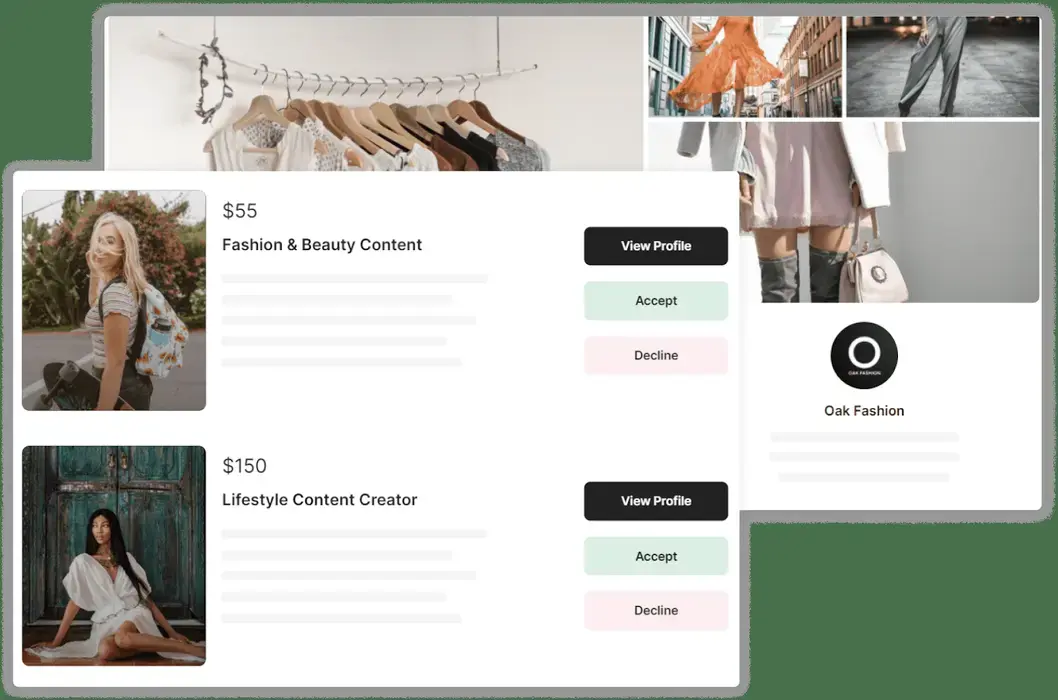
The key is finding creators whose audience matches your target customer and who can deliver content that drives trust and conversions.
Influencer Marketing Tools for Small Business
Small businesses should look for influencer marketing platforms that are affordable, easy to use, and built to scale with limited resources. Key features to prioritize include:
-
Influencer discovery with filters for niche, platform, audience size, and engagement rate
-
Upfront pricing to avoid hidden fees or agency markups
-
Built-in communication tools for direct messaging and negotiation
-
Usage rights management to legally repurpose UGC in ads and marketing
-
Performance tracking dashboards with metrics like CPE, reach, and conversions
-
No long-term contracts, allowing pay-as-you-go flexibility
-
Creator marketplaces with pre-vetted influencers who specialize in UGC
What are the Best Influencer Marketing Tools for UGC?
The best influencer marketing tools for UGC help brands find creators, manage collaborations, and repurpose authentic content across marketing channels. These platforms are especially useful for small businesses looking to generate high-quality user-generated content without high agency fees. Here’s our shortlist:
1. Collabstr
Pros: Built specifically for UGC and micro-influencer campaigns, Collabstr offers upfront pricing, a vetted creator marketplace, and pay-as-you-go flexibility. No long-term contracts or agency fees make it ideal for small businesses.
Cons: Limited access to macro or celebrity influencers, which may not suit brands looking for mass reach.
2. Billo
Pros: Focuses entirely on UGC video creation, especially for paid ads (Meta, TikTok, YouTube). The platform handles creator sourcing, briefs, and deliveries.
Cons: Less flexibility for influencer-owned posting—best for brands that only need content, not influencer reach.
3. Trend.io
Pros: Offers affordable UGC from vetted micro-influencers, with full usage rights included. Great for DTC brands needing consistent, high-quality content.
Cons: Limited to select verticals like beauty, wellness, and fashion; not as scalable for broader niches.
4. Influenster
Pros: Combines UGC reviews with influencer activation, especially useful for e-commerce brands looking to boost product credibility. Integrates with major retail platforms.
Cons: Heavy focus on product sampling and reviews—not ideal for video-first UGC or storytelling campaigns.
5. Aspire
Pros: Offers end-to-end influencer campaign management, UGC licensing, and robust reporting features. Ideal for scaling UGC with CRM and workflow tools.
Cons: Higher price point and more complexity—better suited for mid-sized brands or those with a dedicated marketing team.
TL;DR: Working with Micro-Influencers as a Small Business
-
Micro-influencers deliver better engagement, trust, and ROI than macro creators.
-
User-generated content from real creators boosts performance in ads, emails, and organic channels.
-
Consider factors like niche, platform, and content type ahead of time to set your budget effectively.
-
Use top influencer marketing tools for small businesses like Collabstr to discover creators, manage content rights, and track ROI.