Playbook: Working With Influencers for Your Next Product Launch
Launching a new product is exciting. But getting people to notice it? That’s another challenge altogether.
One solution? Influencer marketing. Influencer marketing is a great strategy for getting your product in front of your target audience. Brands are seeing strong returns from influencers, with 84.8% reporting influencer marketing is effective and 36% saying creator content outperforms brand-created posts.
But many brands wonder: What’s the best way to launch a new product with creators? How do I get influencers to promote my brand? Or even: How do I book a creator for my product launch?
This playbook walks you through the core steps to build an influencer strategy for your next product launch—and highlights the most effective influencer marketing tools so you can run campaigns confidently in-house.
Key Takeaways
-
Influencer alignment is crucial for partnering with content creators for a product launch.
-
You don’t need an agency to do influencer marketing! Brands can run influencer campaigns internally with the right tools.
-
The easiest way to find influencers to promote your products is through influencer marketing platforms.
-
Use influencer platforms with analytics and campaign tracking tools to help measure ROI and optimize future launches.
Influencer marketing for product launches: 3 key steps
If you’re thinking “I need influencers for a product launch,” but have no idea how to get started or build out a process, here are three steps every brand should follow.
1. Find the right influencer based on your brand, audience, budget
The most important factor in a successful launch is influencer alignment. Rather than focusing solely on follower count, brands should prioritize:
-
Audience relevance – Does their following match your target demographics? (Age, location, interests)
-
Engagement quality – Do followers actively comment and interact with their content?
-
Content fit – Does their style align with your brand identity?

That means, you may need to spend time doing some homework. Develop your ICP and research influencers in your industry. Try our Instagram Engagement Rate Calculator or TikTok Engagement Rate Calculator to uncover their engagement quality.
Now, hunting for the right content creators can feel like a lot of manual work. If you’re wondering, “Is there a tool to find influencers by audience or niche?”—yes, there are!
Platforms like Collabstr make it easy to filter creators by niche, platform, and audience data. We’ll dig into these tools more later, but they’re definitely a timesaver and can ensure you’re choosing influencers who can genuinely connect with your ideal customers.
Related reading: How to Find the Right Influencers for Your Brand
2. Outline expectations and use a contract
Once you find the right influencer for your product launch, it’s time to get into the details! Clarity prevents misunderstandings. Influencers appreciate when brands provide:
-
A creative brief (content style, messaging points, hashtags, timing). Here’s a free campaign brief template for you to use!
-
Deliverables (e.g., 2 TikTok videos, 1 Instagram Story)
-
Compensation (flat fee, gifted product, affiliate commission)
Always formalize agreements in a contract. This protects both sides and ensures campaigns stay on schedule. Tools like DocuSign or built-in contract features in influencer platforms can streamline the process.
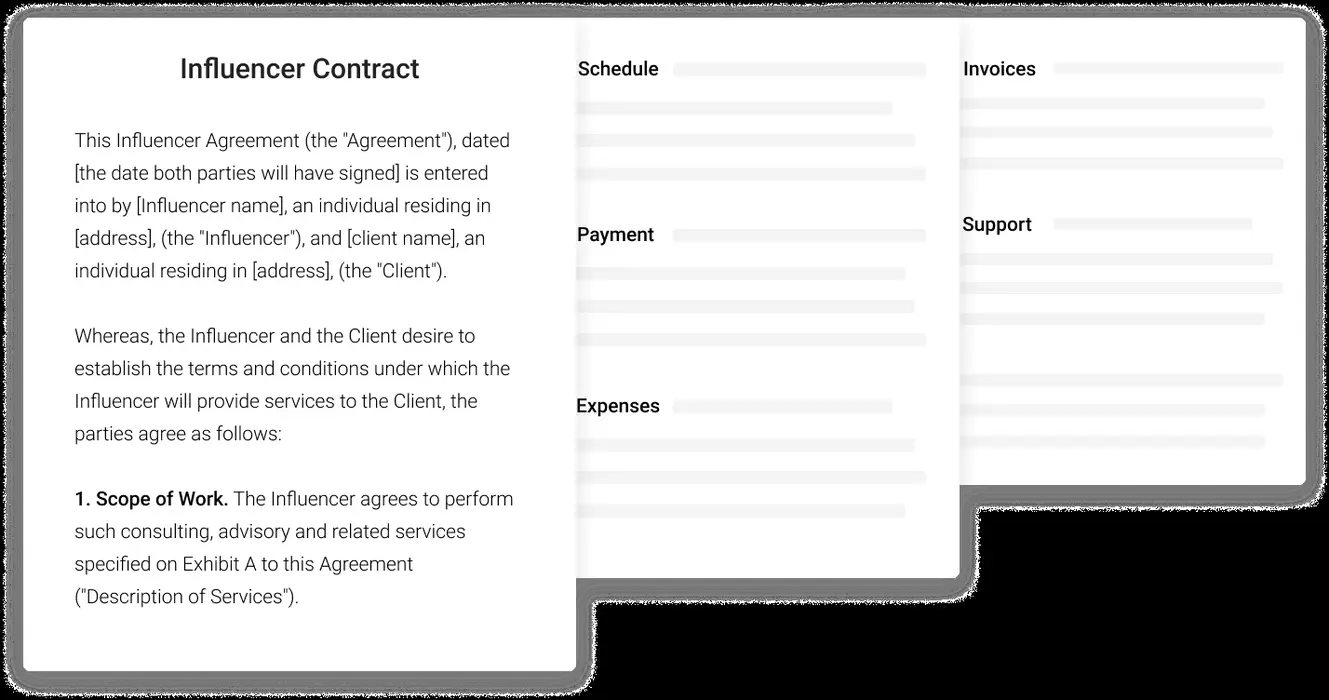
Free resource: Influencer Contract Template
3. Set goals and track performance
Your campaign isn’t finished when influencers post—it’s just beginning! Brands should define clear KPIs such as:
-
Engagement rate (likes, comments, shares)
-
Website traffic from campaign links
-
Sales generated from discount codes or UTM tags
-
Brand sentiment in comments
Here’s where influencer platform analytics and campaign tracking tools matter. By measuring conversions and engagement, you’ll know which influencers drove real impact and which didn’t. That’s data you can use to refine future product launches.
How do I run influencer marketing without an agency?
To run influencer marketing without an agency, it’s important to invest in the right tools. Influencer marketing platforms, like Collabstr, make it possible for even small teams to discover creators, manage outreach, track content, and analyze performance—all from a single dashboard. No agency needed!
And there are benefits to running influencer marketing in-house, too. Running campaigns internally gives you:
-
Direct communication with creators (no middle layer).
-
Cost savings (agencies often take 20–30% of budget).
-
Faster iteration (test and scale campaigns in real time).
Can I test influencer marketing with a small budget?
Yes, influencer marketing can be achieved without a large budget. In fact, micro-influencers (under 50k followers) often drive stronger engagement than celebrities and are more affordable. A few well-targeted collaborations can outperform one expensive partnership. On Collabstr, you can filter influencers under $250 with a click of a button!
Eager to learn more? Let us show you some of the top influencer marketing tools on the market.
Most effective influencer marketing tools for product launches
If you’re looking to launch a new product with the help of creators, using an effective influencer marketing tool will make all the difference. Here are five of the top platforms brands rely on:
1. Collabstr
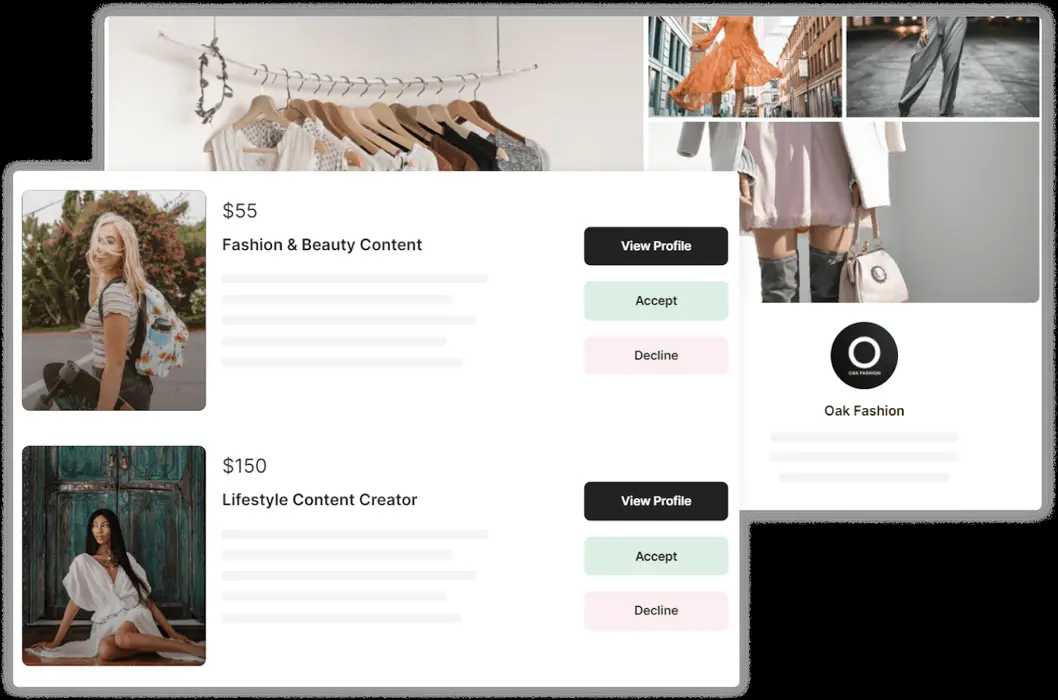
Collabstr is an end-to-end influencer marketing platform that makes launching a product with creators simple and efficient. From finding influencers by audience and niche to managing contracts, payments, and content delivery, Collabstr centralizes the entire workflow. Built-in analytics allow you to track engagement, conversions, and ROI, turning influencer marketing into a seamless, easy-to-manage workstream for any product launch.
2. CreatorIQ
CreatorIQ offers powerful influencer discovery and analytics tools, helping brands identify the creators for their campaigns. Its reporting features ensure you can track engagement, audience demographics, and ROI in one place.
3. Aspire
Aspire centralizes campaign management, from outreach to contracts and deliverables. It’s ideal for brands running in-house influencer programs, enabling seamless coordination with multiple creators at once.
4. Tagger
Tagger is an analytics-first platform, giving brands insight into performance metrics and ROI across every influencer campaign. Use it to optimize your launches and ensure every collaboration drives measurable results.
5. Refersion
Refersion specializes in affiliate and discount-code tracking, letting influencers earn commission on sales they generate. This tool is perfect for building long-term partnerships and incentivizing creators to actively promote your product.
Related reading: Are you a small biz launching a product? Find out which influencer marketplace is best for small brands.
Your next launch starts here
Influencers are no longer just an optional marketing tactic. They’re a cornerstone of modern product launches.
And now, it’s become so easy to handle influencer marketing yourself—without an agency. With the right playbooks and platforms, you have what it takes to launch new products with the help of creators and connect directly with the audiences that matter most.
FAQs
What’s the best way to launch a new product with creators?
Collaborate with influencers whose audience overlaps your target market, provide a clear creative brief, and track results with analytics tools. Discovery and management platforms make the process seamless and ensure ROI.
How do I book a creator for my product launch?
Book creators directly on platforms like Collabstr by browsing profiles, checking audience fit, and submitting a project request. Many tools handle contracts and payments in one place, making booking fast and secure.
Is there a tool to find influencers by audience?
Yes—platforms like Collabstr let you filter creators by audience demographics, niche, and engagement in minutes.