Why Influencer Gifting Goes Quiet, and What Actually Works
- Key Takeaways
- What Influencer Gifting Is, and Why It So Often Goes Quiet
- What Actually Gets the Fastest Yes
- What Happens If the Creator Keeps the Product or Never Posts
- A Gift Doesn't Give You Usage Rights
- How to Run Influencer Gifting That Works
- When Pure Seeding Still Makes Sense
- Frequently Asked Questions
- Pay For the Post, Gift the Product
Key Takeaways
-
Influencer gifting means sending a creator free product hoping they post. The problem is in the word hoping. There is no obligation, so a lot of gifted product turns into silence.
-
The fix isn't a better pitch. It is to pay for the post and send the product. On our marketplace, campaigns that pair product with base pay get the fastest creator response of any type, a median of 22 minutes to the first application.
-
Gifting-only campaigns don't exist on Collabstr, by design. A post you don't pay for is a post you can't count on.
-
Shipping product to a stranger feels risky. Escrow answers that: payment is held until you approve the work.
-
A gift doesn't grant you usage rights. If you want to run the content as an ad, contract it.
What Influencer Gifting Is, and Why It So Often Goes Quiet
Influencer gifting, also called product seeding, is the practice of sending a creator your product for free in the hope that they post about it. The appeal is obvious. No media budget, and content that feels organic because the creator chose to share it.
The problem is the word hope. When a creator receives a gift with no agreement attached, they're under no obligation to post, on any timeline, in any format, at any quality. The industry is candid about how that plays out. Guides on the topic admit there is never a guarantee you'll be shared, and that most brands ship product and hear nothing back. Gifting isn't free marketing. It is a free product with an uncertain, and often empty, return.
That is why on our marketplace gifting-only campaigns don't exist. A campaign can't be published without base pay. It is a deliberate choice, not a missing feature, and the reasoning is simple. A post you don't pay for is a post you can't count on. Gifting works on Collabstr as a product component added to a paid campaign, never as a substitute for paying the creator.
What Actually Gets the Fastest Yes
Here's the finding that reframes gifting. When you pair a product with base pay, creators respond faster than to any other kind of campaign. On our marketplace, campaigns that include a product or gifting component see the first creator application in a median of 22 minutes. Campaigns with an affiliate component take 28 minutes, and posted campaigns overall 31.
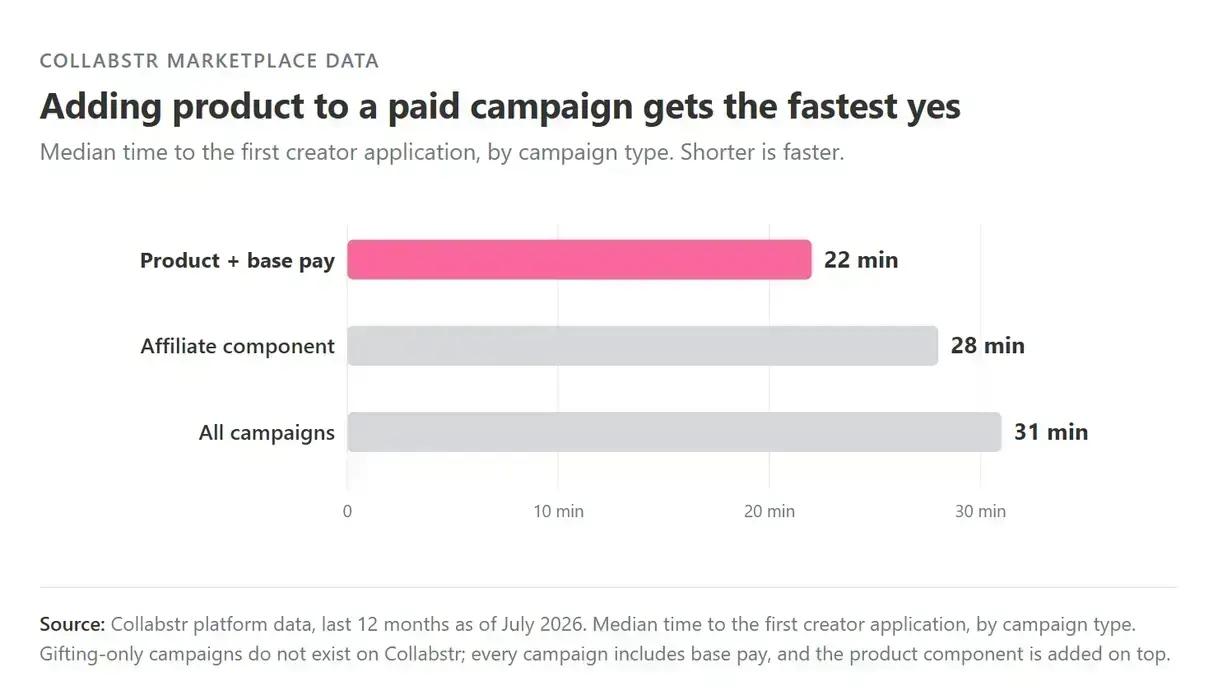
Median time to the first creator application, by campaign type. Collabstr platform data.
Read that against the failure mode of free gifting and the lesson is clear. It isn't that creators dislike products. They respond to a paid campaign with a product faster than to almost anything. What they don't respond to is a request for free work. Add even a modest base payment and the same product that would have sat unopened becomes the quickest yes in the market.
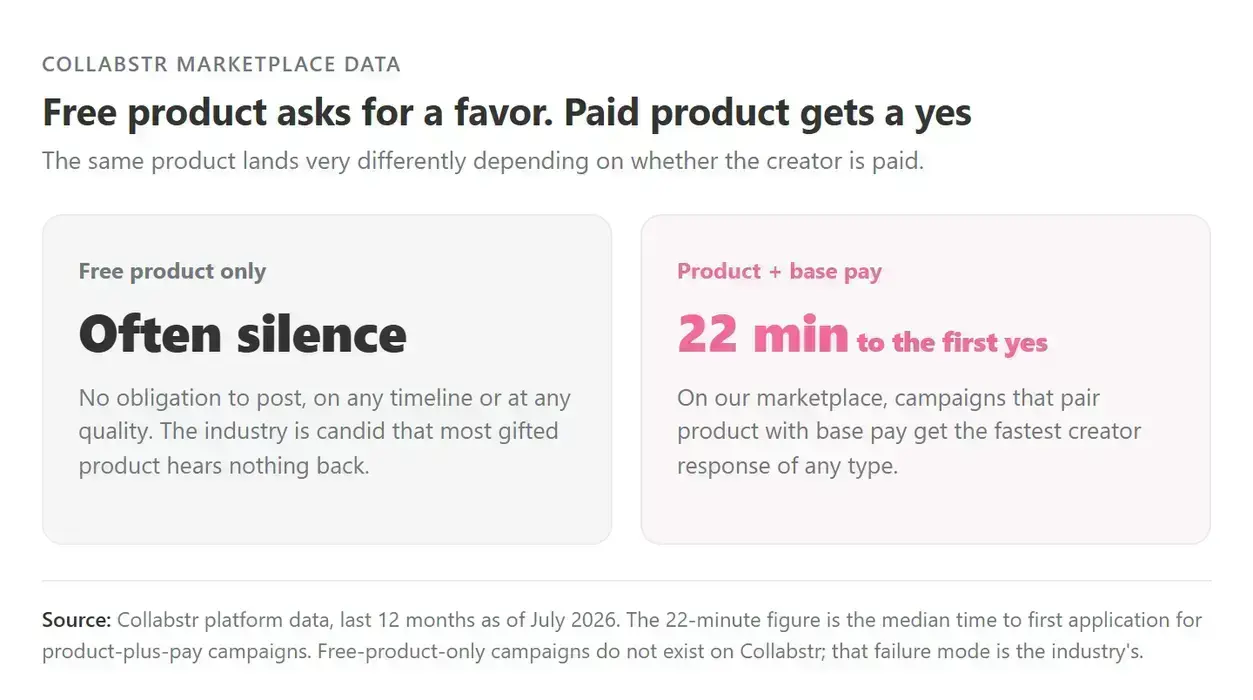
Free product hopes for a post; product plus pay gets the fastest yes. Collabstr platform data.
The economics make this easy. Gifting is usually aimed at micro and nano creators, the most affordable tiers to book. Product plus a small base fee is still a cheap campaign, and unlike a free gift, it is one you can actually plan around.
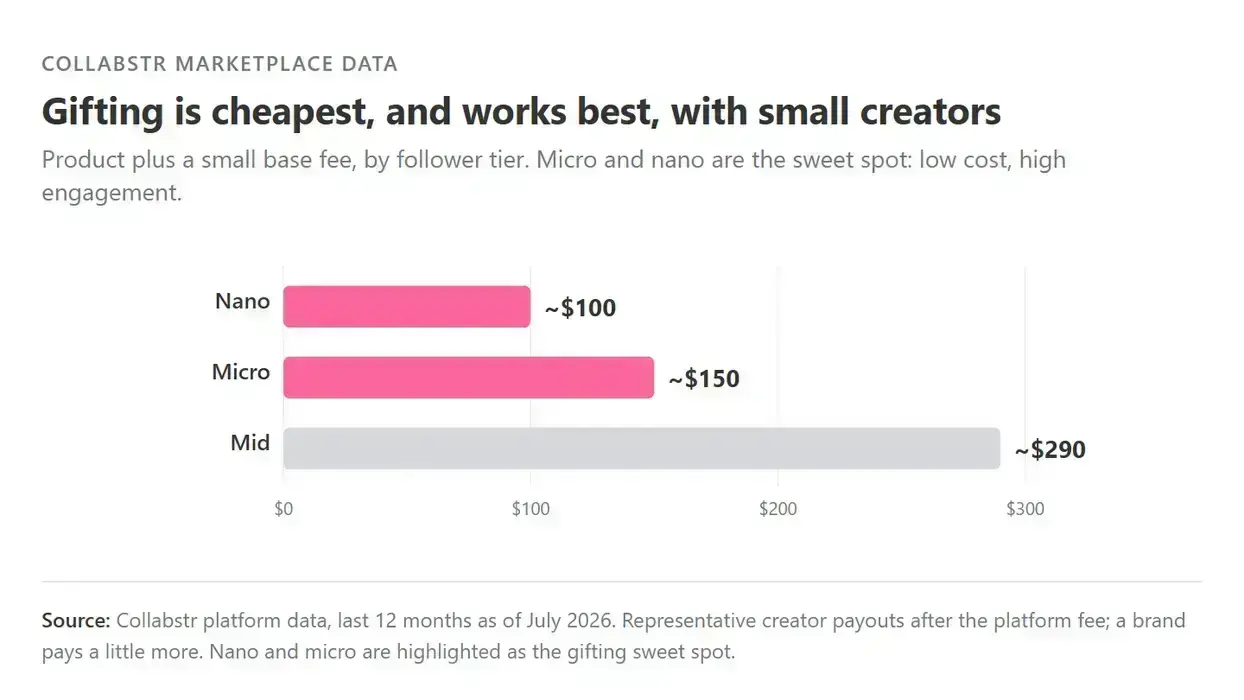
A paid gifting campaign stays affordable for a small brand. Collabstr platform data.
What Happens If the Creator Keeps the Product or Never Posts
The fear that stops most brands from gifting is real. You're shipping something of value to someone you've never worked with. What if they keep it and go quiet.
This is exactly what escrow is for. On Collabstr, payment is held and released only when you approve the delivered work, so a creator who doesn't deliver doesn't get paid. Collaborations are protected, and on the small share of product orders where something goes wrong, brands are reimbursed. On-time delivery runs 70% for campaigns that set a deadline, and the paid structure is a large part of why. A creator who has accepted a paid collaboration has a reason to deliver that a gift recipient simply doesn't.
The takeaway isn't that gifting is dangerous. It is that gifting without a paid agreement removes your only real protection. Attach payment and escrow, and the risk of shipping product drops to something you can manage.
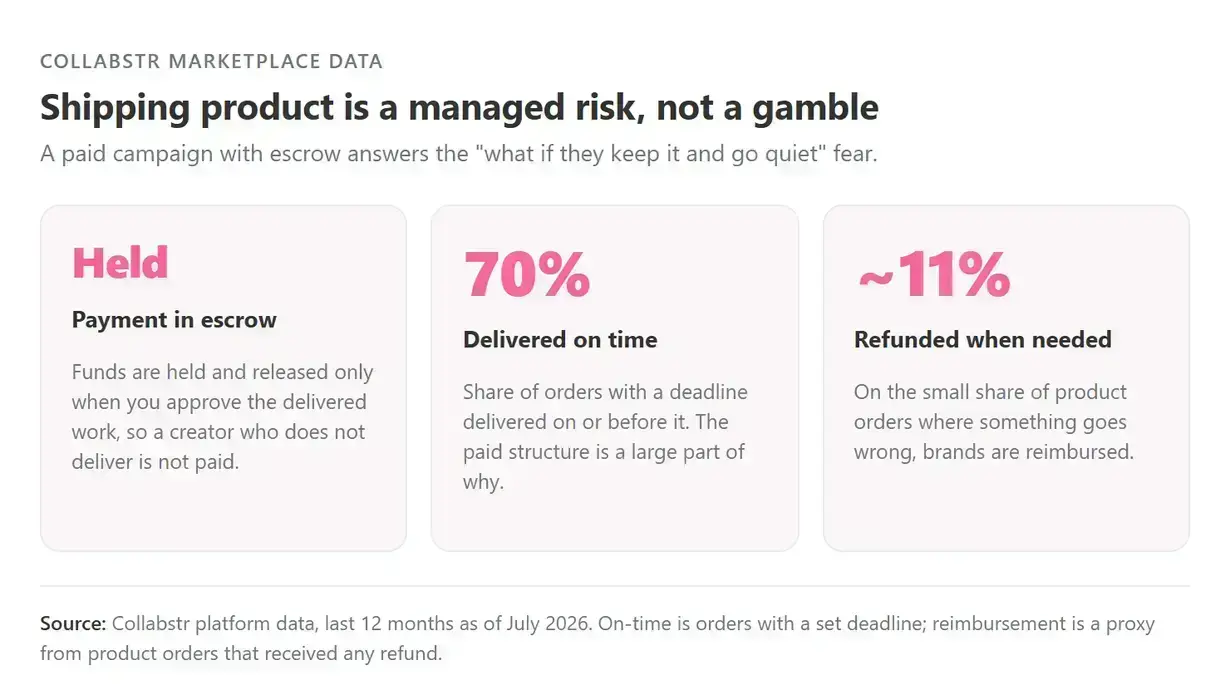
Escrow and on-time delivery protect a gifting campaign. Collabstr platform data.
A Gift Doesn't Give You Usage Rights
One more assumption quietly costs brands money. Sending a product, or even paying for a post, doesn't automatically give you the right to reuse the content. If you want to run a creator's video as a paid ad, feature it on your site, or keep it live indefinitely, those rights have to be agreed in writing.
This matters most for gifting because the whole point is often to generate content you can use. Decide up front what you need, meaning the deliverables, how long you can use them, and on which channels, and put it in the agreement. A paid campaign makes this straightforward, because you're already contracting the work. A free gift rarely comes with any rights at all.
One rule sits outside the contract entirely. The FTC treats a gifted product as a material connection, so the creator has to disclose it as an ad even when no money changed hands. Build that disclosure into the brief, because the obligation is yours to manage, not an optional extra.
How to Run Influencer Gifting That Works
Four steps turn gifting from a hopeful expense into a reliable one.
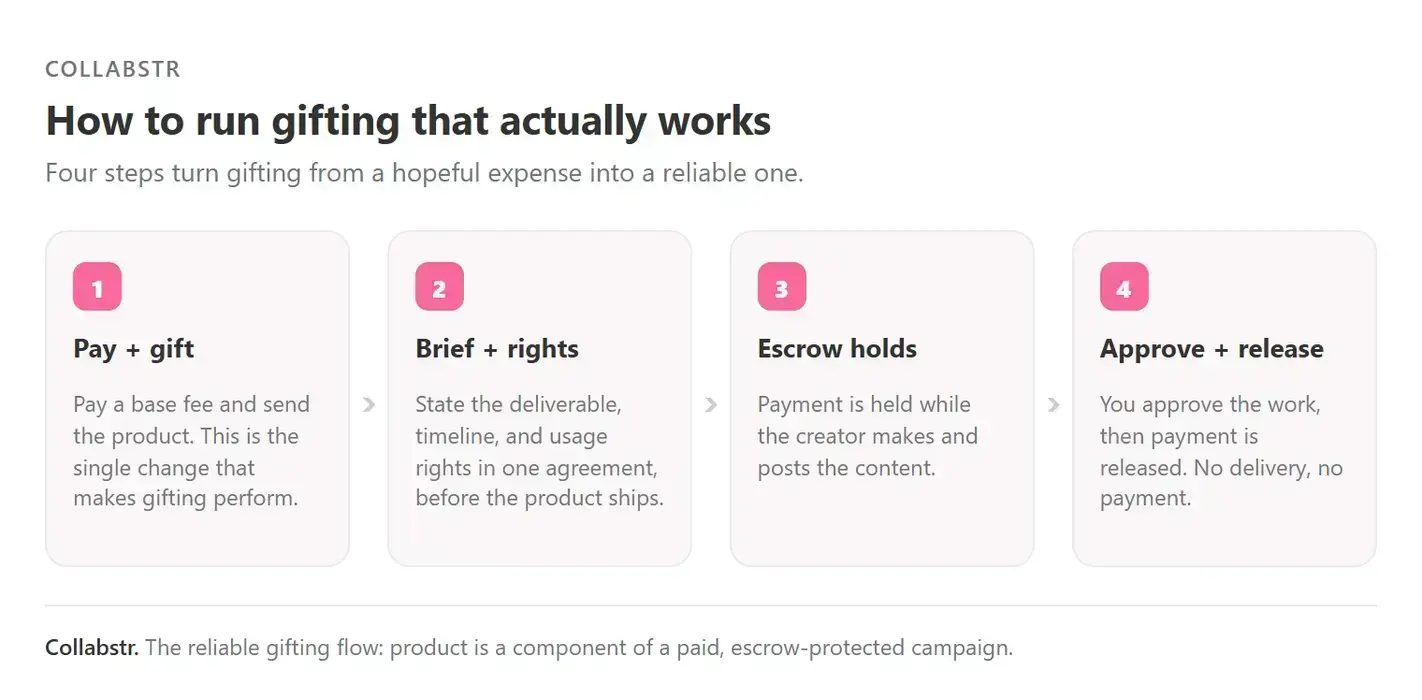
The four-step workflow for gifting that performs. Collabstr.
Pay a base rate, then send the product. This is the single change that separates gifting that performs from gifting that vanishes. It is also how every campaign on our marketplace already works.
Aim at micro and nano creators. They're the sweet spot for gifting: the lowest rates, and audiences that engage more. A larger number of small creators beats one expensive gift to a star.
Write the brief and the rights together. State the deliverable, the timeline, and the usage rights in the same agreement, so there is nothing to negotiate after the product ships. Our influencer onboarding checklist covers shipping, the brief and approval step by step.
Use escrow. Hold payment until the work is approved. It protects your product spend and gives the creator a clear reason to deliver on time.
Send product that photographs and demonstrates well. The most common gifting deliverables are product videos and short posts, so gift things that look good on camera and are easy to show in use.
When Pure Seeding Still Makes Sense
Free gifting isn't always wrong. If you're seeding to people who already love your brand, your own customers or a small list of genuine fans, a no-strings gift can spark honest posts and goodwill. It also fits a high-volume, low-expectation play, where you accept that most recipients will stay quiet and you're fishing for the few who post.
What free gifting can't do is guarantee output. The moment you need a specific deliverable, on a timeline, with rights you can use, you've left the territory of gifting and entered the territory of a paid campaign. Knowing which one you're running is the whole game.
Frequently Asked Questions
What is influencer gifting?
It is sending a creator free product, also called product seeding, in the hope they post about it. It can build goodwill, but with no payment attached there is no guarantee of a post.
Does influencer gifting actually work?
Sometimes, especially with existing fans, but it is unreliable on its own. Pairing product with a base payment is far more dependable. In our data, product-plus-pay campaigns get the fastest creator response of any type, 22 minutes to the first application.
Do I have to pay influencers if I send free products?
You don't have to, but you'll get far better and more predictable results if you do. On Collabstr every campaign includes base pay, and gifting is a product added on top.
What if a creator keeps the product and never posts?
Use a platform with escrow. Payment is held until you approve the work, so a creator who doesn't deliver isn't paid, and product orders are protected.
Can I use gifted content in my ads?
Only if you have the usage rights, which a gift doesn't automatically grant. Agree the rights in writing before the campaign, along with the deliverables and timeline.
Who should I gift to?
Micro and nano creators are the sweet spot: the lowest cost for a paid post plus product, and higher engagement than larger accounts.
Pay For the Post, Gift the Product
Influencer gifting isn't a way to get posts for free. It is a way to make a paid campaign land harder, by putting your product in a creator's hands. Free product on its own tends to go quiet. Product plus payment gets the fastest yes in the market and content you can actually use. The next step is to brief a creator, attach the product, and hold payment until you approve the work.
Methodology: Collabstr figures are drawn from platform activity over the last 12 months as of July 2026. Time-to-application figures are medians by campaign type. Gifting-only campaigns don't exist on the platform because every campaign includes base pay; "product or gifting component" means the campaign ships product. On-time delivery and reimbursement figures cover orders with a deadline and product orders respectively.