Influencer Marketing Examples: What Brands Actually Run, With the Numbers
- Key Takeaways
- Why Most Influencer Marketing Examples Are Useless to You
- What the Famous Examples Get Right
- What brands actually run
- Five Influencer Marketing Examples You Can Copy
- What the Examples That Work Have in Common
- How to Run Your Own Version
- Frequently Asked Questions
- Copy the Shape, Not the Celebrity
Key Takeaways
-
Most influencer marketing examples you find online are famous, big-budget campaigns you can't repeat. The useful examples are the repeatable shapes a normal brand can run.
-
The most common example isn't a celebrity post. In our 2026 report, UGC made for ads is the fastest-growing campaign type, up 133% year over year, and Instagram is the biggest single platform at 40% of campaigns. Everyday content, not celebrities, is the market.
-
Product and gifting examples get the fastest response. Creators apply to those campaigns in a median of 22 minutes.
-
The examples that work share three traits: micro-creators, content built to be reused, and a structure you can run again.
-
You don't need a megastar. You need the right creator, the right format, and a repeatable plan.
Why Most Influencer Marketing Examples Are Useless to You
Search for influencer marketing examples and you get the same list every time. Daniel Wellington and its watches. A pop star signing with a beauty brand. A dating app hiring a viral comedian. These are real campaigns, and they worked, but they share a problem. They're famous, expensive, and unrepeatable. Reading them teaches a normal brand about as much as watching a Formula 1 race teaches you to commute.
The more useful question isn't which campaign won an award. It is what influencer marketing actually looks like when a brand like yours runs it. We can answer that, because our marketplace is a live record of exactly which examples brands run, what they cost, and what gets delivered.
Start with the biggest surprise. The most common example of influencer marketing isn't a celebrity posting to millions. It is everyday content. In our 2026 report, user-generated content made for ads is the fastest-growing campaign type, up 133% year over year, and Instagram is the biggest single platform at 40% of all campaigns, ahead of standalone UGC at 35% and TikTok at 21%. The mental image most people have of influencer marketing, the celebrity holding a product, is the smaller reality.
What the Famous Examples Get Right
There is one lesson worth taking from the famous list. Daniel Wellington is widely credited with growing on a large number of micro- and nano-influencers posting simple, honest content about a watch, rather than on celebrity megadeals. That is the part you can copy, and our own data points the same way. Micro-creators are the workhorses of the whole channel. In the biggest consumer niches the smallest creators are very affordable, and nearly 80% of all collaborations cost under $300, so a real example is within reach of a small budget.
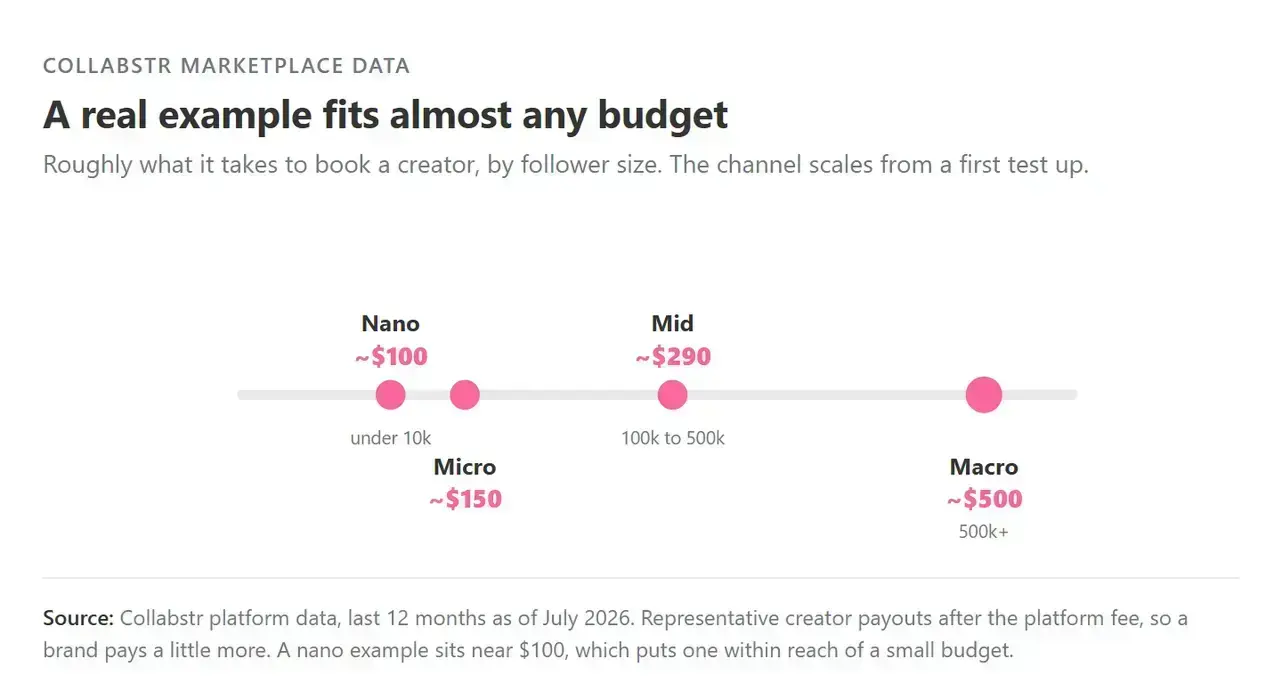
What a typical creator collaboration costs, by platform and tier. Collabstr platform data.
So keep the lesson, drop the scale. You don't need a pop star. You need several of the right small creators and a format built to travel.
What brands actually run
Before the examples, the shape of the market in one view. In our 2026 report the platform mix is clear: Instagram leads at 40% of campaigns, platform-agnostic UGC is 35%, TikTok is 21%, and YouTube and X make up the rest.
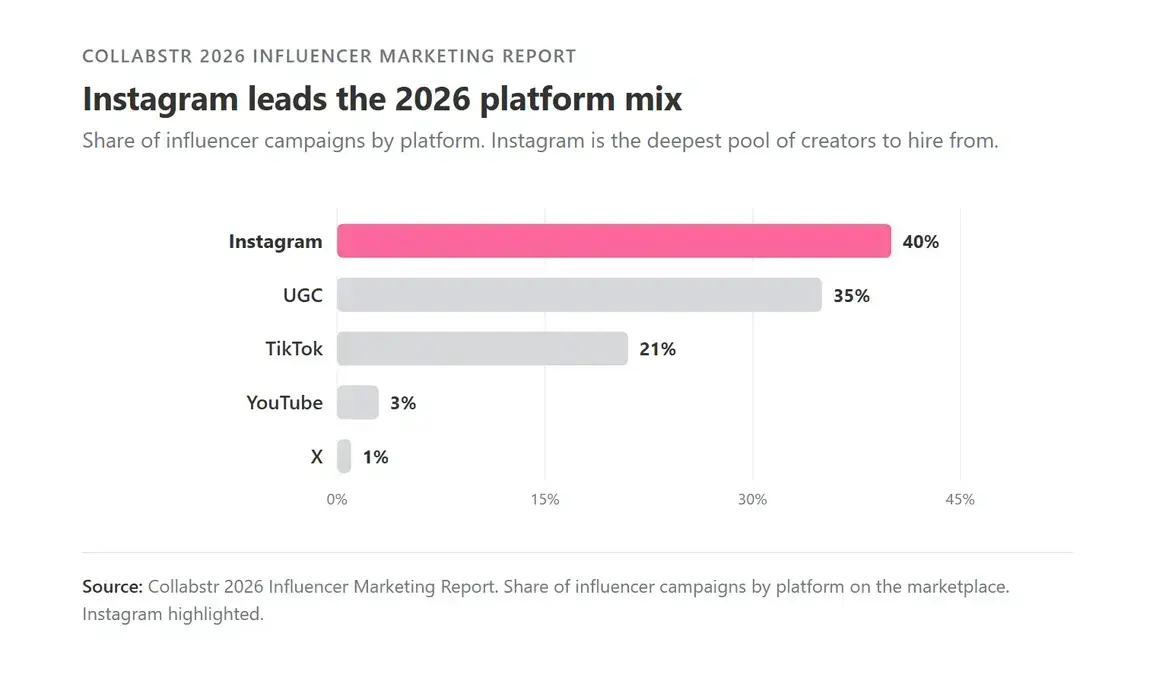
Share of influencer campaigns by platform, 2026. Collabstr 2026 Influencer Marketing Report.
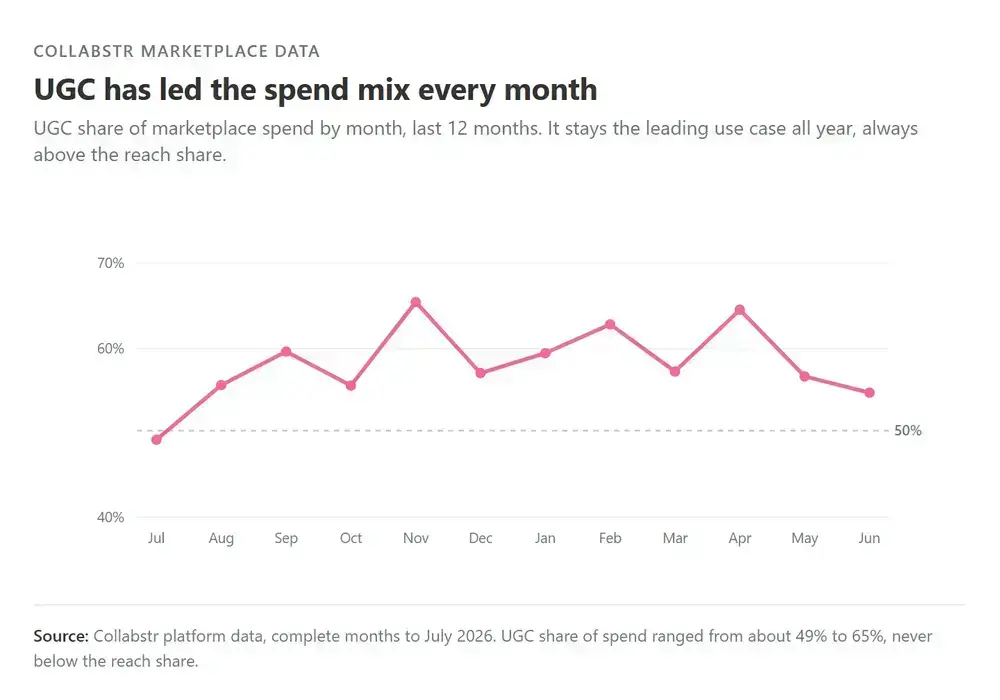
UGC campaigns are the fastest-growing type on the marketplace. Collabstr platform data.
That mix reframes the whole category. Influencer marketing is now, more than anything, a way to produce advertising, not just borrow an audience. Collabstr's 2026 Influencer Marketing Report shows UGC campaigns grew 133% year over year, and a growing share of budgets flows into exactly this kind of made-to-run content. Keep that in mind as you read the examples, because it changes which one is right for you.
Five Influencer Marketing Examples You Can Copy
Each of these is a real, common shape of campaign, with the number that defines it.
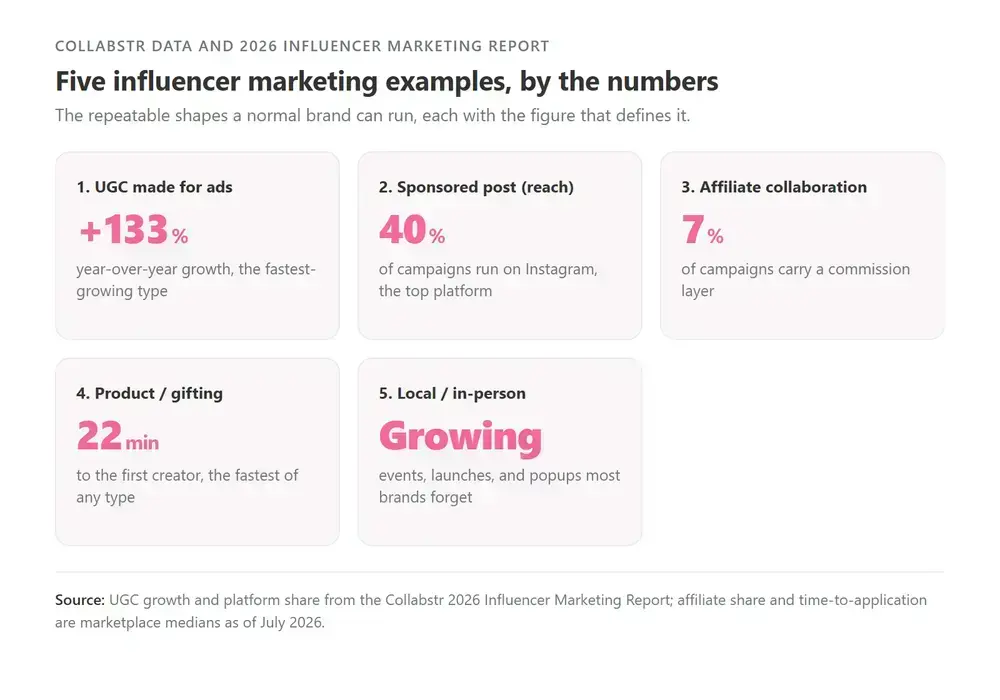
Five influencer marketing examples, by the numbers. Collabstr platform data.
1. UGC made for ads. A creator makes a short video about your product, and you run it as a paid ad rather than relying on their feed. It is the fastest-growing example on the marketplace, up 133% year over year, and its common deliverables are video ads and product videos. The point isn't the creator's audience. It is the content, which you keep and reuse across your own channels.
2. The sponsored post. A creator posts a Reel, Story, or video about your brand to their own audience. This is the classic example, and Instagram is the biggest platform for it at 40% of campaigns. The average paid Instagram collaboration runs $193 and a YouTube collaboration $255, so you can size a campaign before you commit.
3. The affiliate collaboration. You add a commission or affiliate arrangement on top of the creator's base pay, so they earn more when their content drives sales. Only 7% of the campaigns we can see use one, which makes it both underused and a way to stand out. On our marketplace it is always an addition to base pay, never a replacement for it.
4. The product or gifting example. You ship a creator your product and pay them to feature it. These campaigns get the fastest response on the marketplace: creators apply in a median of 22 minutes, faster than the 31-minute overall median. Sending product is one of the quickest ways to get a campaign moving.
5. The local or in-person booking. You hire a creator to show up, at a store launch, an event, or a popup, and make content on location. It is a smaller but growing part of the market, and it is the example most brands forget they can run through the same platform.
What the Examples That Work Have in Common
Read across the five and the same three traits appear.
They use micro-creators. The expensive celebrity is the exception, not the rule. The bulk of real campaigns run on smaller creators who cost less and whose audiences engage more.
They build content to be reused. The fastest-growing example in our data exists to make ads. Even a sponsored post is a Reel you can run again as paid media. The best examples treat creator content as inventory, not a one-time mention.
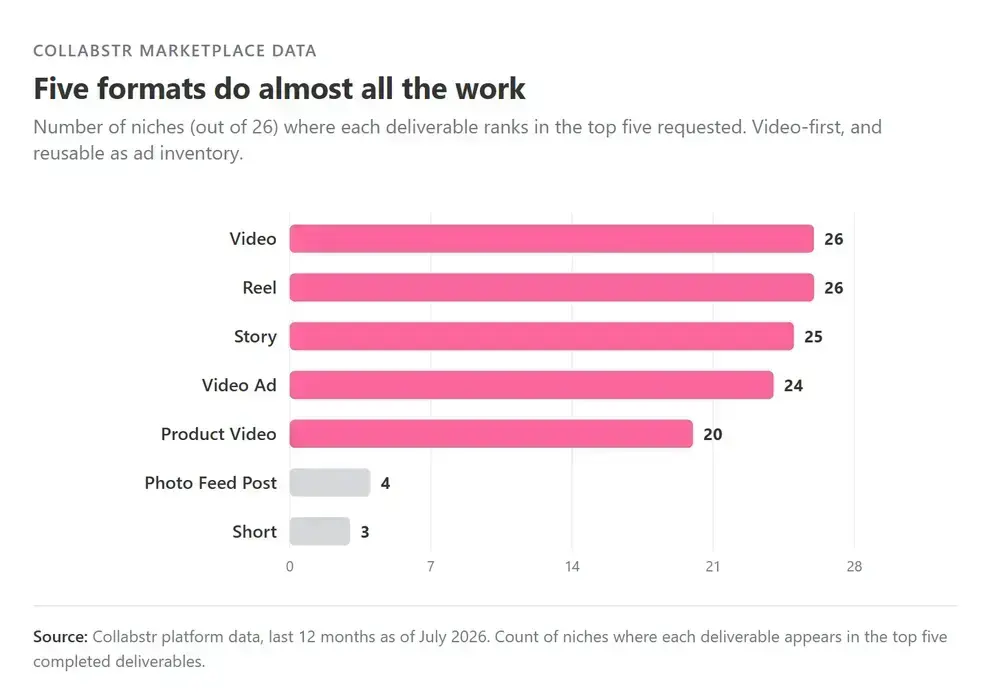
The most-requested creator deliverables are video-first and reusable. Collabstr platform data.
They're repeatable. None of these depends on a viral moment. Each is a shape you can run this month and again next quarter, which is what separates a program from a lucky campaign.
How to Run Your Own Version
Pick the example that matches your goal. If you want advertising you can run yourself, brief a creator for UGC. If you want to borrow an audience, buy a sponsored post. If you want to keep the ones that work, rebook the creators who deliver.
Then run it in a way that protects you. On Collabstr, prices are shown before you hire, payment is held and released only when you approve the work, and you can book a creator directly instead of running an agency search. Brands that have run creator campaigns here include Orange Theory Fitness, ClickUp, and Hopper, and the examples above are the shapes those campaigns take.
Frequently Asked Questions
What is an example of influencer marketing?
The most common one is a creator making a short video that a brand runs as its own ad. UGC is the fastest-growing campaign type in our 2026 report, up 133% year over year, ahead of the classic sponsored post that lives on a creator's feed.
What is the most effective type of influencer marketing?
It depends on your goal, but micro-creator campaigns consistently offer strong value: lower rates, with the smallest creators the most affordable to book, and profile-level engagement you can screen on before hiring.
What is UGC in influencer marketing?
UGC is content a creator makes that the brand runs as its own advertising, rather than relying on the creator's feed. It is the fastest-growing example of influencer marketing today.
Are influencer marketing examples only for big brands?
No. The famous examples are big, but the common ones aren't. In the biggest consumer niches the smallest creators are inexpensive, and nearly 80% of collaborations cost under $300, which puts a real example within reach of a small budget.
How do affiliate examples work?
The creator earns a commission on sales they drive, layered on top of base pay. Only 7% of the campaigns we can see use one, so it is a way to both motivate a creator and stand out.
Copy the Shape, Not the Celebrity
The best influencer marketing examples aren't the ones that made headlines. They're the repeatable shapes running quietly every day: UGC made into ads, sponsored posts, gifting, and affiliate collaborations. The next step is to pick the one that fits your goal and run it.
Methodology: Platform mix, UGC growth, and rates are from Collabstr's 2026 Influencer Marketing Report, which analyzed more than 21,000 collaborations and over 200,000 creators. The affiliate-component share and time-to-application figures are marketplace medians and shares over the last 12 months as of July 2026.