YouTube Influencer Marketing: What It Costs, and Why (2026)
- Key Takeaways
- Why YouTube Influencer Marketing Is Priced Like Premium Inventory
- What YouTube Influencer Marketing Costs, by Niche
- Why Creators Keep More on YouTube
- The Durability Advantage
- How to Find and Vet the Right YouTube Creators
- How to Measure the Return
- The Wider Market Backdrop
- Frequently Asked Questions
- Pay For the Asset, Not the Moment
Key Takeaways
-
YouTube is the most expensive platform to hire on. In our 2026 report the average brand pays $255 for a YouTube collaboration, ahead of Instagram at $193 and TikTok at $186.
-
The same creator category often costs more on YouTube than on Instagram, but only where long-form does the work. Business, health, and travel carry a clear YouTube premium. Visual niches like fashion stay competitive on Instagram.
-
YouTube creators keep most of what they charge. They realize 82% of their list price, against 32% on Twitch, so the platform attracts and holds strong creators.
-
A YouTube video is a durable asset. It keeps ranking in search and surfacing in recommendations for years, which is why a higher price buys inventory rather than a moment.
-
It isn't only for big budgets. Shorts and smaller creators give brands an affordable way in.
Why YouTube Influencer Marketing Is Priced Like Premium Inventory
YouTube influencer marketing is the practice of paying a YouTube creator to make and publish a video about a brand, usually a long-form review or integration, and increasingly a Short. The creator posts it to their own channel, and the brand reaches an audience that already trusts that voice. What sets YouTube apart from the other platforms isn't the format alone. It is the price, and what that price buys.
In our data, YouTube is the most expensive platform to hire on. In Collabstr's 2026 Influencer Marketing Report, the average brand pays $255 for a YouTube collaboration, above Instagram at $193, TikTok at $186, user-generated content at $154, and every other platform we track. If you've treated YouTube as one option among several priced the same, the rates say it sits in its own tier.
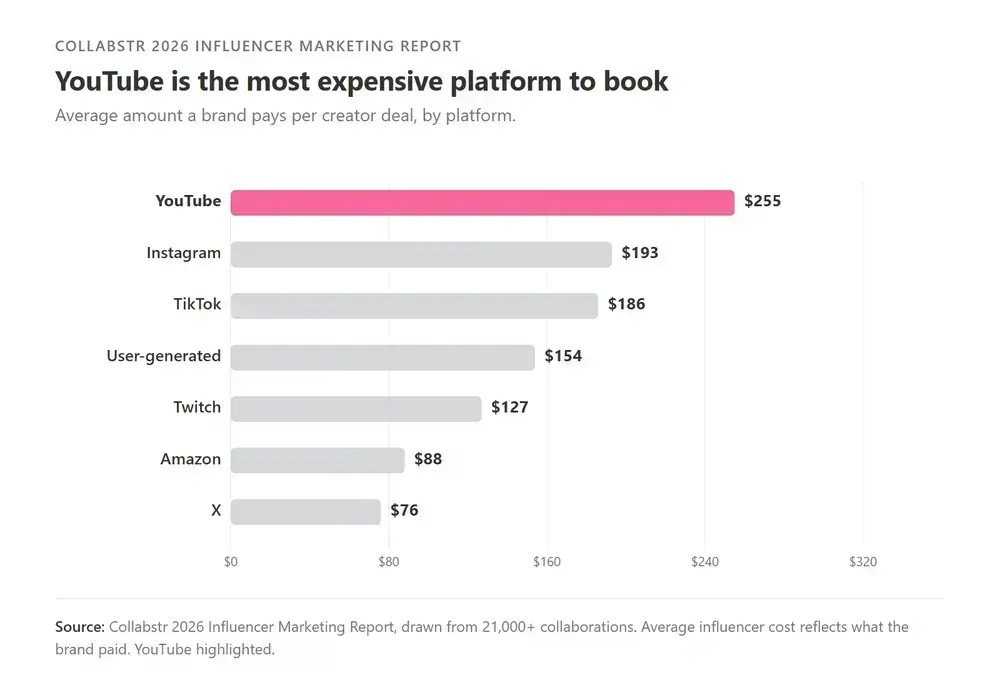
Average amount a brand pays per creator collaboration, by platform. Collabstr 2026 Influencer Marketing Report.
Two things drive that. YouTube has a smaller creator pool than Instagram or TikTok. In our 2026 report Instagram is 40% of all campaigns to YouTube's 3%, so YouTube's supply is far thinner and rates run higher. And a YouTube collaboration usually means long-form production, which takes more work than a single photo or a fifteen-second clip. The higher price isn't a markup. It is the cost of a bigger asset.
What YouTube Influencer Marketing Costs, by Niche
The single platform average hides the number you plan against, which is the rate in your category, and price is far more a niche decision than a platform one. YouTube's premium is concentrated in the expertise-driven, information-rich niches, where a creator explains, demonstrates, or reviews and long-form is the format that sells.
In our 2026 report the most expensive niches are exactly those: skilled trades at $309, education at $307, and entrepreneur and business at $295. The most affordable are high-supply consumer niches like beauty at $210 and gaming at $214, where a single striking image often does the job and long-form adds less. Match the platform to how your category is consumed: the more your buyers want depth and proof, the more a YouTube integration earns its price.
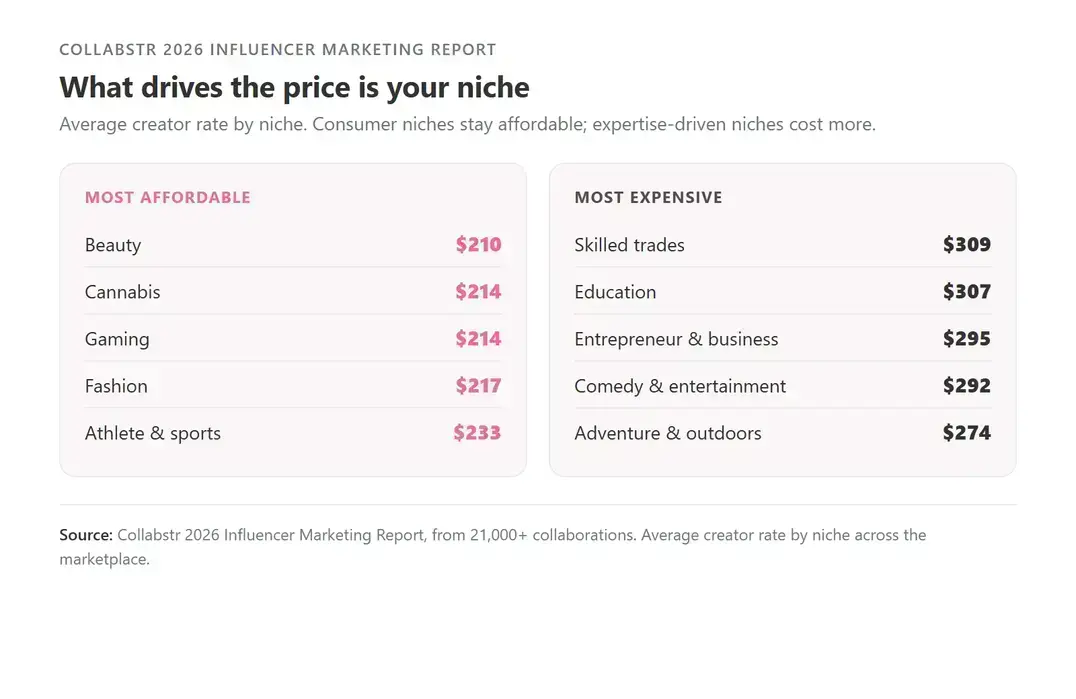
Average creator rate by niche, most affordable vs most expensive. Collabstr 2026 Influencer Marketing Report.
The same pattern shows up in where the market is growing. Several of the fastest-growing niches are expertise-driven, skilled trades and health and fitness among them, which is where long-form has the most room to run.
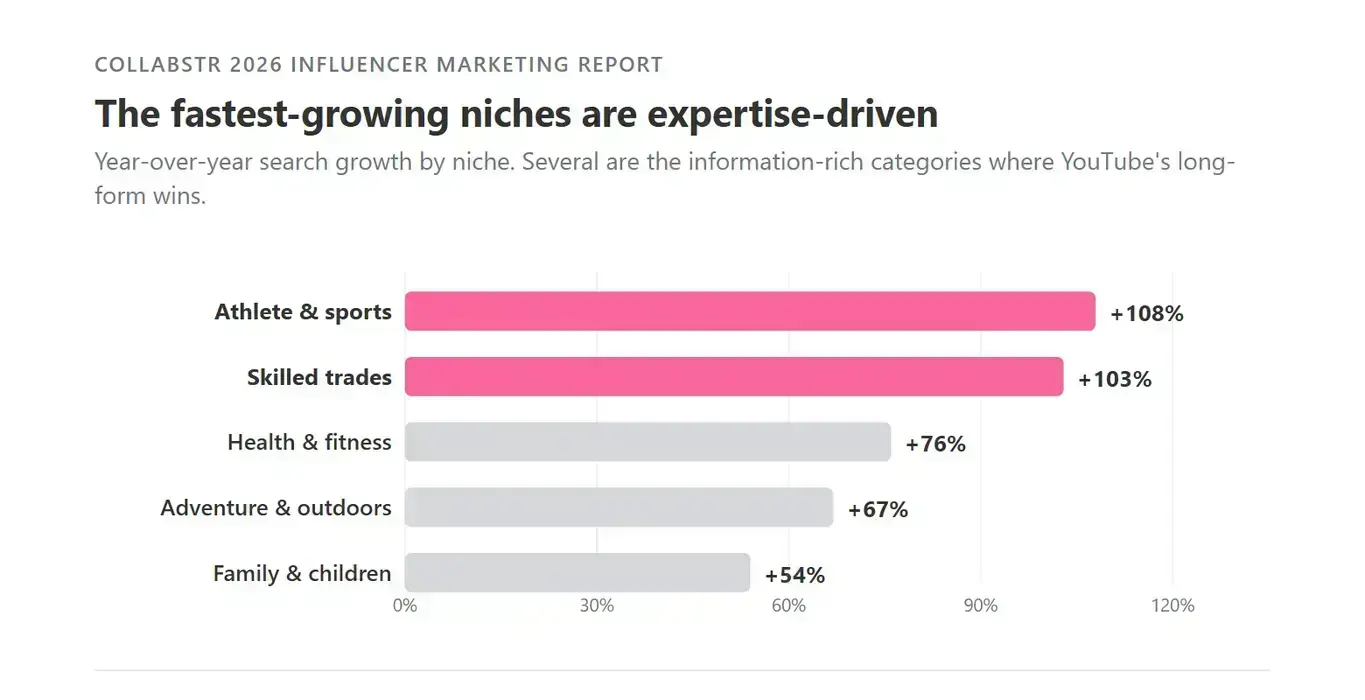
Fastest-growing niches by year-over-year search growth. Collabstr 2026 Influencer Marketing Report.
Why Creators Keep More on YouTube
The price is only half the picture. The other half is what the creator actually takes home, and here YouTube stands apart. According to our 2026 Influencer Marketing Report, YouTube creators ask $311 for a collaboration and realize $255 of it, a capture rate of 82%. On Twitch, creators list the highest asking price of any platform, $398, and realize $127, a capture rate of 32%.
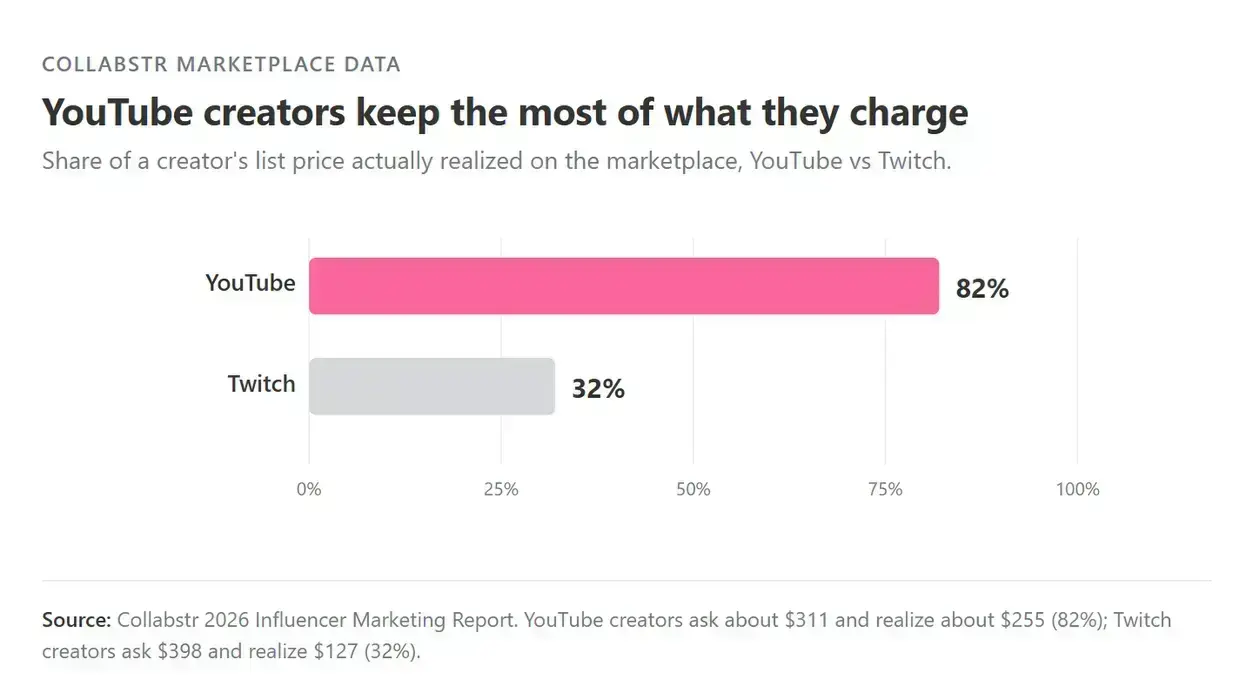
Asking price versus realized payout, by platform. Collabstr 2026 Influencer Marketing Report.
That gap matters to brands even though it describes creator economics. A platform where strong creators keep 82% of what they charge is a platform that attracts and holds strong creators. YouTube's own payout terms point the same way. Creators keep 70% of net revenue on memberships, Super Chat, Super Stickers, and Super Thanks, and 55% on watch-page ads. The people who make a living from this work have a clear reason to invest in their YouTube channel, and that investment is what a brand is buying access to.
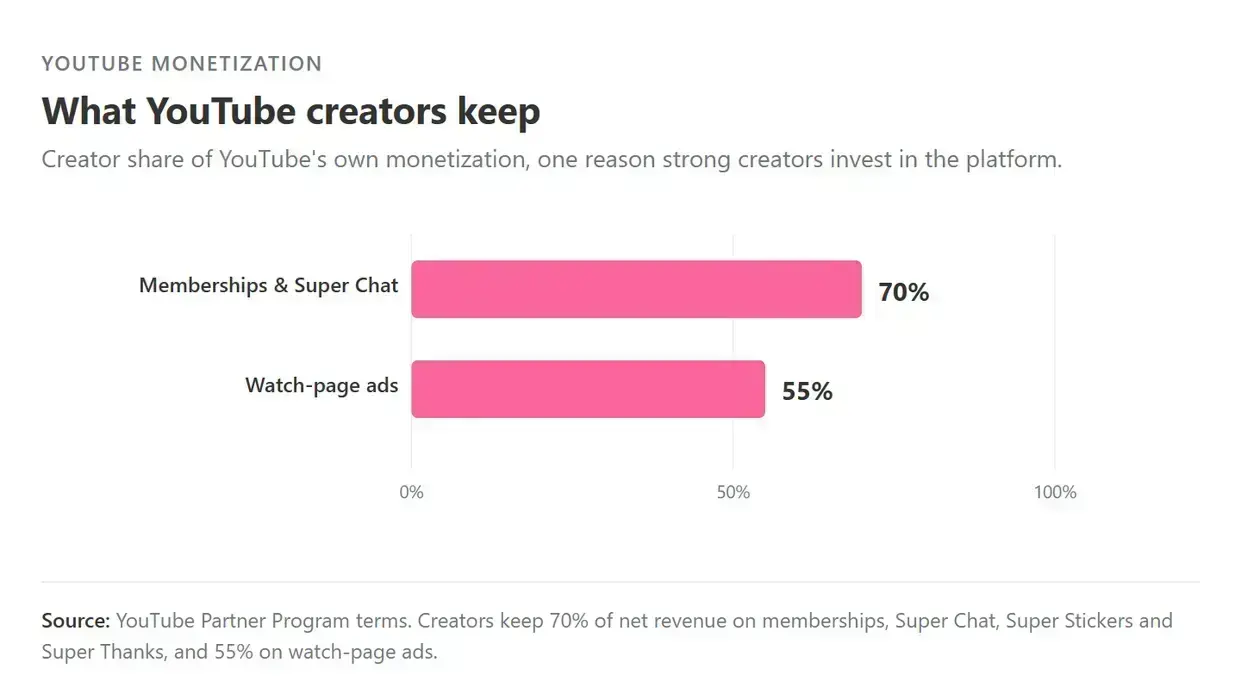
YouTube's published revenue splits for creators. YouTube Help.
The Durability Advantage
The strongest argument for YouTube isn't reach on the day a video goes live. It is what happens in the months after. A YouTube video is indexed by Google, ranks for search terms, and keeps surfacing in recommendations long after the campaign ends. A sponsored review can drive traffic and sales for years.
That changes what the price means. An Instagram Story is measured in hours and a TikTok in days, but a YouTube integration is a durable asset that compounds. When you divide the cost across a year of surfacing rather than a single week in a feed, the most expensive platform to hire on can be the cheapest per view delivered over time.
Long-form isn't the only way in. YouTube Shorts gives smaller creators and smaller budgets an affordable on-ramp, and the same channel that hosts a high-end business integration also hosts short, low-cost clips. The durability argument holds at both ends. Whatever you publish on YouTube keeps working after you stop paying for it.
How to Find and Vet the Right YouTube Creators
Start with the format, not the follower count. Decide whether your category rewards a long-form integration, which is where YouTube earns its premium, or a Short, which keeps the cost down. The niche comparison above tells you whether YouTube or Instagram is the more efficient buy for your category before you commit a budget.
Check engagement and comments against the channel's view count. A creator with heavy views and thin comments is a weaker buy than the raw numbers suggest. Favor finding creators whose audience actually responds, because that is what carries a sponsored message.
Then hire in a way that protects you. On Collabstr, prices are shown before you hire, payment is held and released only when you approve the finished video, and you can hire creators directly rather than running an agency search. For a format as involved as a YouTube integration, seeing the price up front and approving the work before payment removes the two risks that make brands hesitate.
How to Measure the Return
Anchor measurement on the metrics that hold up. Cost per thousand views, or CPM, is the reliable one, and on YouTube it should be read across time rather than on launch day, because the video keeps earning views. Track the CPM at 30 days and again at 90, and the durable-asset argument shows up in the numbers.
Beyond CPM, watch the two things YouTube does that other platforms don't. Search visibility, meaning whether the video ranks for terms your buyers use, and recommendation pickup, meaning whether YouTube keeps serving it. A campaign that keeps surfacing months later delivered more than its launch-week views suggested.
The Wider Market Backdrop
None of this sits still. HypeAuditor estimates the global influencer market will reach $31 billion by 2027, and our 2026 report shows video-first, long-form content holding its value as brands chase durable reach. YouTube will take a large share of that on the strength of long-form and search. The brands that plan against real rates, real creator economics, and the durability of the asset are the ones that will spend it well.
Frequently Asked Questions
How much does YouTube influencer marketing cost?
In our 2026 report the average brand pays $255 for a YouTube collaboration, the most of any platform. Your niche rate is the number that matters: expertise-driven categories like business command the highest rates, while high-supply niches like gaming sit lowest.
Is YouTube more expensive than Instagram?
Usually yes, in information-rich niches. Business, health, and travel creators cost more on YouTube. In visual niches like fashion, Instagram is the higher-priced platform.
Why are YouTube rates higher?
A smaller creator pool and more production. A long-form video is more work than a photo or a short clip, and thinner supply pushes rates up.
Do YouTube creators keep more of what I pay?
Yes. YouTube creators realize 82% of their list price, the strongest capture rate of the platforms we track.
Should I use long-form videos or Shorts?
Long-form earns YouTube's premium and its search shelf life. Shorts are the affordable on-ramp for smaller budgets and smaller creators. Many brands use both.
How long does a YouTube video keep working?
Often years. Because YouTube videos are indexed and recommended over time, a sponsored video can drive traffic and sales long after the campaign ends.
Pay For the Asset, Not the Moment
YouTube influencer marketing costs more than the other platforms, and now you know what that buys. Creators keep more of what they charge, the content keeps working for years, and the premium is concentrated in the niches where long-form actually sells. The next step is to see live YouTube rates for your category and hire a creator directly.
Methodology: Platform rates, niche rates, and the capture-rate figures are from Collabstr's 2026 Influencer Marketing Report, which analyzed more than 21,000 collaborations and over 200,000 creators. Average influencer cost reflects what the brand paid; realized figures reflect what the creator received after fees. Niche rates and niche growth are from the 2026 report. External projection: HypeAuditor. YouTube revenue splits: YouTube Help.