Influencer Affiliate Marketing Works Best When It Isn't Commission-Only
- Key Takeaways
- What Influencer Affiliate Marketing Is, and Where It Goes Wrong
- Pay a Base Fee, Then Add the Commission
- Affiliate Is the Most Underused Layer in Influencer Marketing
- What Affiliate Is Actually Good For
- How to Set Up an Influencer Affiliate Collaboration
- Affiliate, Influencer, and Ambassador: the Difference
- Frequently Asked Questions
- Add the Layer Most Brands Skip
Key Takeaways
-
Influencer affiliate marketing pays a creator a commission on the sales their content drives. It works well, but not the way most brands try to run it.
-
The common version is commission-only, which asks a creator to work for a maybe. That is a weak offer, and it is why so many affiliate programs stall.
-
The version that works pairs a base fee with commission. On our marketplace, affiliate is always a layer on top of base pay, never the whole collaboration.
-
Affiliate is the most underused layer in influencer marketing. Only 7% of the campaigns we can see carry a commission component, which makes it both an edge and an opportunity.
-
Its real power is duration. A commission gives a creator a reason to keep promoting between posts, which is how a one-off hire becomes an ongoing one.
What Influencer Affiliate Marketing Is, and Where It Goes Wrong
Influencer affiliate marketing is a partnership where a creator earns a commission on the sales their content drives, usually through a unique link or discount code. The appeal to a brand is obvious. You pay for results rather than posts, and the creator has a real stake in the outcome.
That appeal is also where it goes wrong. Most brands read affiliate as a way to get influencer content without paying for it, and they run it commission-only. The industry frames it exactly this way, as a partnership with no fixed payment where the creator earns only on sales. Put yourself in the creator's position and the problem is clear. You're being asked to make content now and hope it converts later, for a payout that may arrive in 30 to 90 days, if it arrives at all. For an established creator with a full schedule, that is an easy collaboration to decline.
So commission-only affiliate programs stall, not because commission is a bad idea, but because a maybe is a weak offer. The fix isn't to drop the commission. It is to stop making it the whole collaboration.
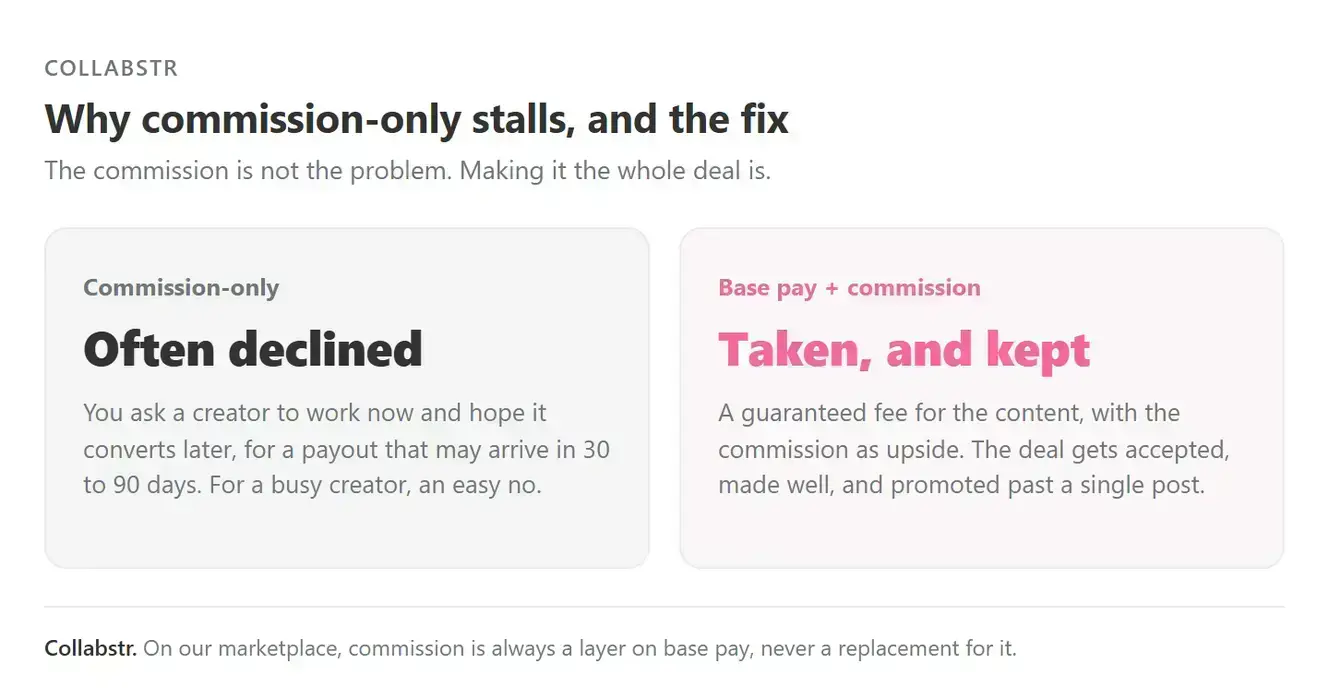
Why commission-only stalls, and base-plus-commission gets taken. Collabstr.
Pay a Base Fee, Then Add the Commission
On our marketplace, influencer affiliate marketing works because it is never commission-only. A campaign can't run without base pay, so a commission is always a layer on top of a paid collaboration, not a replacement for it. The creator is paid for the work regardless, and the commission gives them a reason to keep pushing it.
That structure changes the creator's math entirely. Instead of gambling their time on your conversion rate, they take a guaranteed fee and treat the commission as upside. A collaboration they would have declined as commission-only becomes one they accept, make well, and keep promoting. The base fee buys the content and the commitment. The commission buys the extra effort.
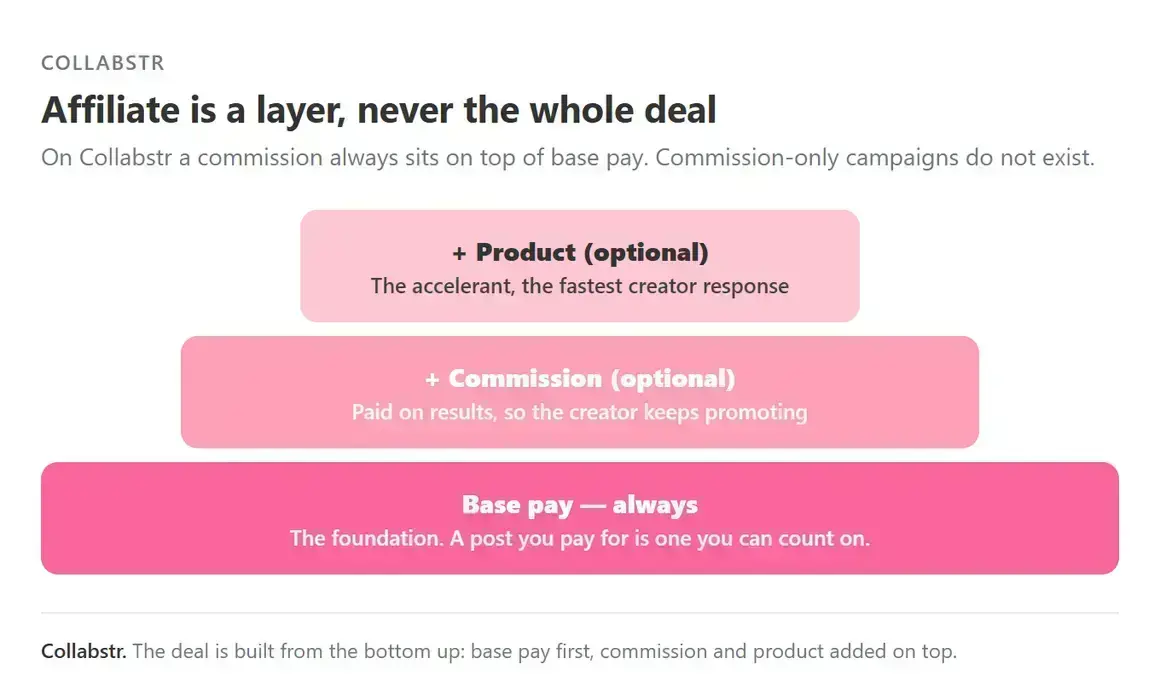
The collaboration that works: base pay for the content, commission for the extra effort. Collabstr.
It is also affordable. The smallest creators are the least expensive to book, so base pay plus a commission is a structure a small brand can run, not just a large one. (see our influencer marketing strategy guide)
Affiliate Is the Most Underused Layer in Influencer Marketing
Here's the opportunity. Affiliate is the least-used structure on the marketplace. Only 7% of the campaigns we can see carry an affiliate or commission component at all. That counts only campaigns that name the arrangement in their brief, so read it as a floor, but even doubling it would leave the large majority without one.
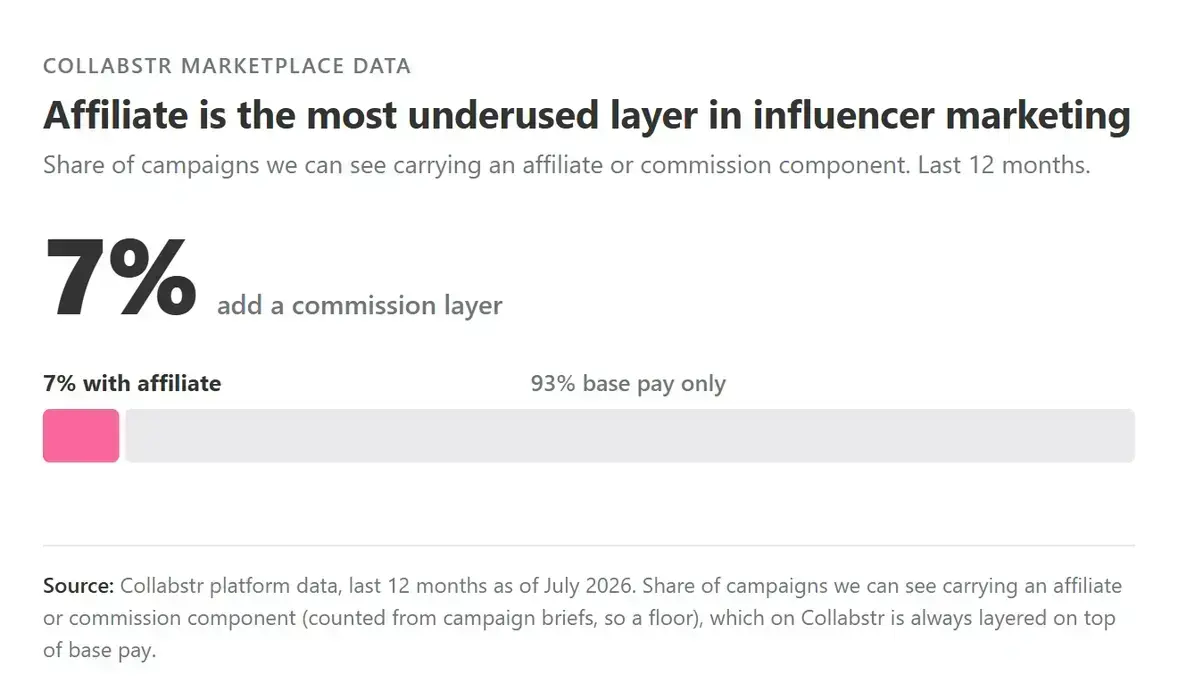
Only 7% of campaigns carry a commission component. Collabstr platform data.
Read that as an edge rather than a warning. The vast majority of brands run a flat-fee post and stop there, which means a brand that adds a well-structured commission stands out to creators and gets more from each collaboration. Adding a commission doesn't even slow things down. Campaigns with an affiliate component see their first creator application in a median of 28 minutes, faster than the 31-minute overall median. Creators aren't put off by a commission layered on real pay. They respond to it.
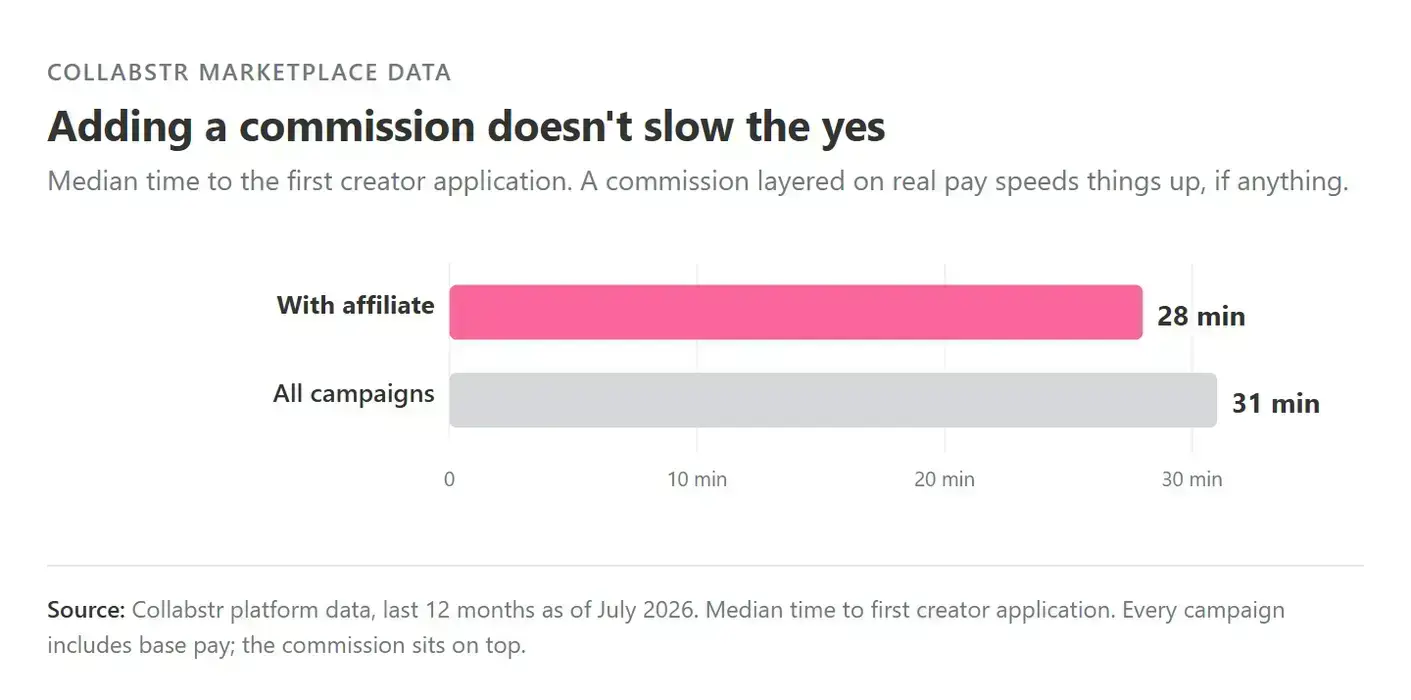
Adding a commission doesn't slow a campaign down. Collabstr platform data.
What Affiliate Is Actually Good For
The point of affiliate isn't to save money on the post. It is to change how long the post keeps working.
A flat-fee sponsored post is a moment. The creator makes it, publishes it, and the collaboration is done. A commission changes that, because the creator now earns every time their content converts, which gives them a reason to keep the link live, mention it again, and answer questions from followers who are considering the purchase. The collaboration stops being a single post and becomes an ongoing, lightly promoted recommendation.
That is why affiliate pairs naturally with a repeat relationship. Turning a one-off into a repeat relationship is rare, and a commission is one of the cleanest ways to keep a good creator engaged between formal campaigns. Used this way, affiliate is less a payment model than the bridge from a one-off campaign to an ongoing program. (see our brand ambassador program guide)
How to Set Up an Influencer Affiliate Collaboration
Six choices turn affiliate from a vague idea into a working collaboration.
Pay a base fee. This is the single decision that separates affiliate that works from affiliate that stalls. Pay for the content, then add commission as upside.
Set a real commission rate. Make it worth a creator's continued effort. A rate that wouldn't move you wouldn't move them either.
Give a clean link or code. The creator needs a simple, memorable way for their audience to buy, and you need it to track reliably.
Track honestly. Attribution in this channel is imperfect, so agree up front how sales are counted and over what window, typically the 30 to 90 days the industry uses.
Disclose the relationship. The FTC requires the creator to disclose an affiliate commission wherever the link or code appears, in plain language a follower can't miss. Make it part of the brief so it is handled from the first post.
Agree usage rights. As with any campaign, paying for a post or a commission doesn't grant you the right to reuse the content in ads. Contract that separately. (see our influencer gifting guide)
Plan the follow-up. The value of affiliate compounds when the creator keeps promoting, so treat the first collaboration as the start of a relationship, not the end of a transaction.
Affiliate, Influencer, and Ambassador: the Difference
These three terms overlap enough to cause confusion, so here's the clean version.
Influencer marketing is the broad category: paying a creator to make content about your brand. A sponsored post is the classic example.
Affiliate marketing is a payment layer inside it: the creator earns a commission on the sales they drive, ideally on top of a base fee rather than instead of one.
An ambassador program is the time dimension: the same creators, hired again and again, often with a commission attached to keep them invested. Affiliate is frequently the mechanism that makes an ambassador relationship worth a creator's while.
Put simply, you can run influencer marketing without affiliate, but affiliate is what turns a series of posts into a partnership.
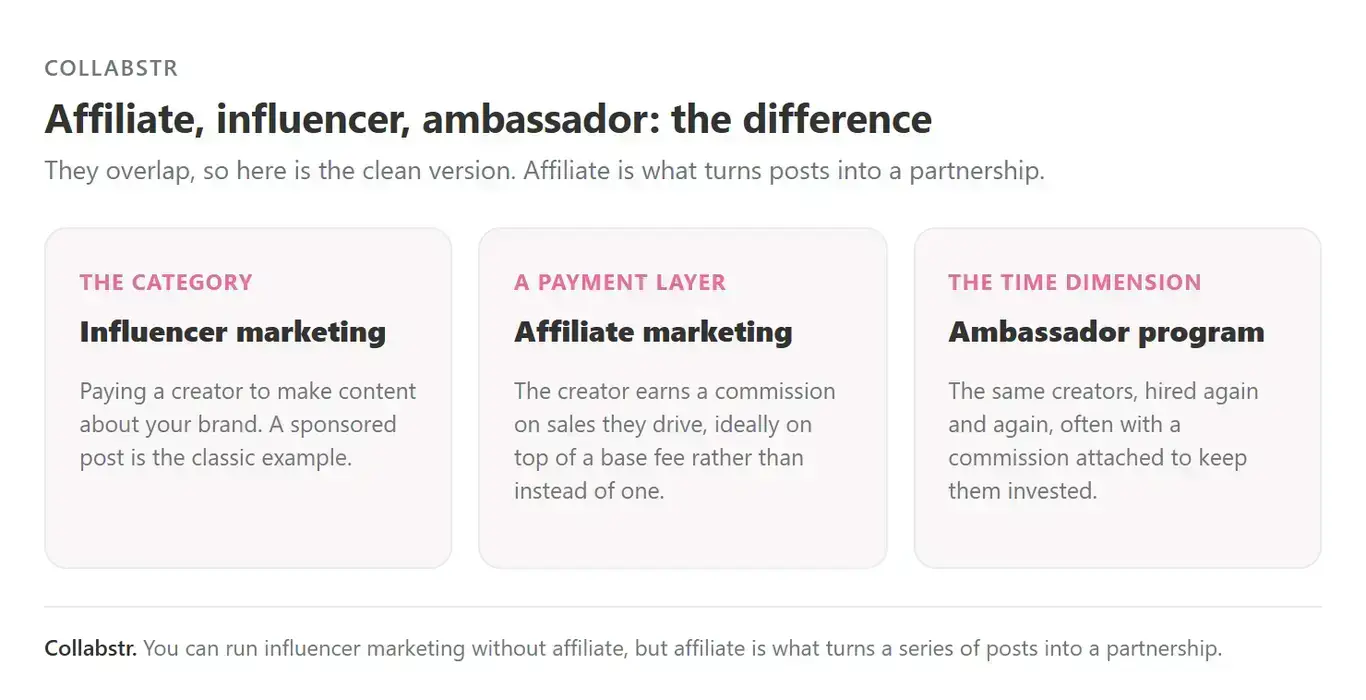
How affiliate, influencer, and ambassador fit together. Collabstr.
Frequently Asked Questions
What is influencer affiliate marketing?
It is a partnership where a creator earns a commission on the sales their content drives, usually through a unique link or code. It works best when the commission sits on top of a base fee.
Is affiliate marketing better than influencer marketing?
They aren't rivals. Affiliate is a payment layer inside influencer marketing. The strongest collaborations combine a base fee for the content with a commission for the results.
Should I pay influencers a flat fee or commission?
Both. Commission-only collaborations stall because they ask a creator to work for a maybe. A base fee plus commission gets the collaboration taken and keeps the creator promoting.
How much commission should I offer influencers?
Enough to be worth their continued effort. The exact rate depends on your margins, but a token commission won't motivate anyone, so set one you would find meaningful yourself.
When do affiliate influencers get paid?
The base fee is paid for the work, held in escrow and released when you approve it. Commissions typically follow the sale by 30 to 90 days, once the purchases are confirmed.
Add the Layer Most Brands Skip
Influencer affiliate marketing isn't a way to get creators cheaply. It is a way to make a paid collaboration keep working, by giving the creator a stake in the result. Skip the commission-only trap, pay a base fee, add a commission on top, and you're running the layer that only 7% of brands bother with. The next step is to brief a creator, set a commission, and pay for the work up front.

Methodology: Collabstr figures are drawn from platform activity over the last 12 months as of July 2026. The affiliate share compares campaigns with an affiliate or commission component against those without; time-to-application is a median. Commission-only campaigns don't exist on the platform because every campaign includes base pay. Commission payout timing (30 to 90 days) is an industry norm, not a Collabstr figure.