The Small Brand’s Guide to Nano-Influencer Marketing Costs
Nano-influencer marketing has emerged as a powerful, cost-effective strategy for small brands looking to boost brand awareness and engagement. As the influencer market evolves, more brands are turning to nano-influencers—those with smaller follower counts but highly engaged audiences—to drive authentic engagement through sponsored content.
However, understanding nano-influencers rates and the overall influencer marketing price structure can be challenging for businesses with limited budgets. This guide will break down nano-influencer rate sheets, platform-specific pricing, and practical tips to help you navigate the world of influencer pay, ensuring you maximize your ROI without stretching your budget.
We’ll define what a nano-influencer rate sheet is, explore its benefits, and provide a detailed breakdown of average costs across key social media platforms like Instagram, TikTok, YouTube, Facebook, and Twitter. Finally, we’ll show you how to use influencer marketing platforms like Collabstr to search for nano-influencers and access transparent influencer rate information, empowering you to negotiate fair prices for your next influencer marketing campaign.
What Is a Nano-influencer Rate Sheet?
A nano-influencer rate sheet is a document or pricing guide that outlines the costs associated with different types of sponsored content created by nano-influencers. Typically, these sheets include prices for various deliverables such as:
-
Sponsored Posts: A static Instagram post or Facebook update.
-
Instagram Stories: Single images or short videos, often with swipe-up links.
-
Instagram Reels & IGTV Videos: Short-form or longer video content tailored for engagement.
-
TikTok Videos: Creative, trend-driven short-form content.
-
YouTube Mentions or Dedicated Videos: Product reviews, tutorials, or shoutouts.
-
Additional Add-Ons: Options like usage rights, affiliate marketing integrations, or bonus content such as giveaways.
Understanding these rate sheets is crucial for budgeting. They provide transparency, helping you avoid both overpaying and undervaluing an influencer’s work. While nano-influencers typically charge less than their larger counterparts, rates can vary significantly based on factors like niche, engagement rate, follower count, and content quality. With a clear rate sheet, you can compare influencer marketing rates, ensuring your brand partnership is both fair and effective.
Benefits of Understanding Influencer Rate Sheets
Grasping the details of influencer rate sheets brings several advantages for small brands:
-
Budgeting:
Rate sheets enable you to allocate your marketing budget more effectively by knowing exactly what to expect in terms of influencer pay. This clarity helps in planning campaigns that align with your financial constraints. -
Negotiation:
When you understand the standard influencer marketing rates, you’re better equipped to negotiate a fair post price. This knowledge ensures that you can discuss terms confidently and secure the best deal for sponsor content. -
ROI Calculation:
With clear pricing details, you can estimate the potential return on investment (ROI) for your influencer campaign. Knowing the average cost per Instagram post or TikTok video allows you to calculate expected engagement and conversions. -
Comparison:
Rate sheets allow you to compare nano-influencers’ rates across different social media platforms. Whether you’re reviewing Instagram influencer prices or TikTok influencer rates, you can choose the best fit for your target audience and campaign objectives. -
Avoiding Overspending/Underselling:
Understanding fair market rates prevents you from overspending or, conversely, undervaluing an influencer’s work. This balance is critical to establishing a sustainable and professional brand partnership. -
Professionalism:
Using rate sheets promotes transparency and sets clear expectations, which fosters a more professional relationship with influencers. This professionalism can lead to smoother collaborations and better long-term partnerships.
A Breakdown of Nano-Influencer Rates by Social Media Platform
When planning your marketing campaign, it’s essential to know the typical nano-influencer rates on various platforms. Below is a detailed breakdown of average costs for key social media channels:
Instagram is a favorite among nano-influencers due to its visual appeal and high engagement rates. Here are the typical rate ranges:
-
Sponsored Posts (Static Image):
nano-influencers might charge anywhere from $100 to $2,000 per post, depending on follower count and niche relevance. -
Instagram Stories:
Rates for a single Instagram story can range from $500 to $3,000. If multiple story frames or swipe-up features are included, prices will likely increase. -
Instagram Reels:
Given the rising popularity of Reels, nano-influencers may charge between $500 to $5,000 for a creative, short-form video. -
Carousels (Multiple Images):
For posts with multiple images, expect rates to be slightly higher, generally in the $500 to $7,000 range. -
IGTV Videos/Live Streams:
These are less common among nano-influencers, but if applicable, rates can range from $300 to $10,000, reflecting the additional production effort.
Platform-Specific Factors Influencing Instagram Pricing:
Key factors include the influencer’s engagement rate, overall reach, quality of content, and the authenticity of their audience. Nano-influencers with high-quality, relatable content tend to command better rates despite smaller follower counts.
Content Examples:
Successful Instagram content might include a lifestyle photo featuring your product, a step-by-step Instagram story demonstrating its use, or a creative Reel that showcases the product in an engaging way. The balance between in-feed posts and ephemeral stories can significantly impact overall pricing.
TikTok
TikTok’s dynamic, trend-focused environment makes it an attractive platform for nano-influencers, particularly for brands targeting a younger demographic.
-
Short-form Videos:
Nano TikTok influencer rates generally range from $150 to $6,000 per video. The pricing can vary based on the influencer’s ability to create viral content. -
Live Streams:
Although less common, live streams may cost anywhere from $200 to $10,000, reflecting the real-time interaction and potential for higher engagement. -
Duets/Stitches:
Rates for these collaborative formats can be similar to standard short-form videos, typically in the $150 to $5,000 range.
Platform-Specific Factors Influencing TikTok Pricing:
TikTok pricing is influenced by the potential for virality, the quality of video content, and the ability to leverage trending sounds and challenges. High video views and authentic interactions are key metrics for determining an influencer’s worth on this platform.
Content Examples:
Effective TikTok content might include a product demonstration, participation in a trending challenge, or a humorous skit that organically integrates your brand.
YouTube
YouTube content by nano-influencers is often more detailed and requires higher production value, impacting overall pricing.
-
Sponsored Videos (Dedicated Videos):
Nano YouTube influencer rates for dedicated product review or feature videos typically range from $500 to $2,000. -
Mentions/Shoutouts:
A brief mention within a larger video might cost between $250 to $1,000, depending on the video's length and context. -
Product Integrations:
These are usually integrated into a tutorial or vlog and can range from $400 to $2,500, factoring in production complexity.
Platform-Specific Factors Influencing YouTube Pricing:
Pricing on YouTube depends on video views, watch time, subscriber count, and niche relevance. The production quality and depth of content generally command higher rates than other platforms.
Content Examples:
A successful YouTube campaign might include a detailed product review, a tutorial demonstrating product use, or an integration within a lifestyle vlog that seamlessly promotes your brand.
Although not as popular as Instagram or TikTok among nano-influencers, Facebook still offers valuable engagement through community groups and shared content.
-
Sponsored Posts:
Rates typically range from $100 to $500 for a dedicated post. -
Shared Content:
For shared posts or sponsored articles, costs may be similar, depending on audience reach. -
Live Streams:
When applicable, live streams can range from $20 to $7,000.
Platform-Specific Factors Influencing Facebook Pricing:
Key considerations include community engagement, audience demographics, and the relevance of content to local or niche markets.
Content Examples:
Examples include posts reviewing a local business, shared articles relevant to your brand, or live Q&A sessions that foster real-time interaction.
X (Formerly Twitter)
For brands considering X, nano-influencer rates are generally lower due to the platform’s fast-paced nature.
-
Sponsored Tweets:
nano-influencers might charge $5 to $25 per tweet. -
Retweets:
Retweet fees are typically similar or slightly lower, depending on reach and engagement.
Platform-Specific Factors Influencing Twitter Pricing:
Twitter pricing is influenced by the rapid news cycle and the potential for quick, viral engagement. The concise format of tweets often leads to lower costs compared to visual platforms.
Content Examples:
Effective Twitter strategies might include a product recommendation tweet or a retweet of a major brand announcement, helping to amplify your message across the platform.
Scale Your Business: Find Nano-Influencers and Their Rates on Collabstr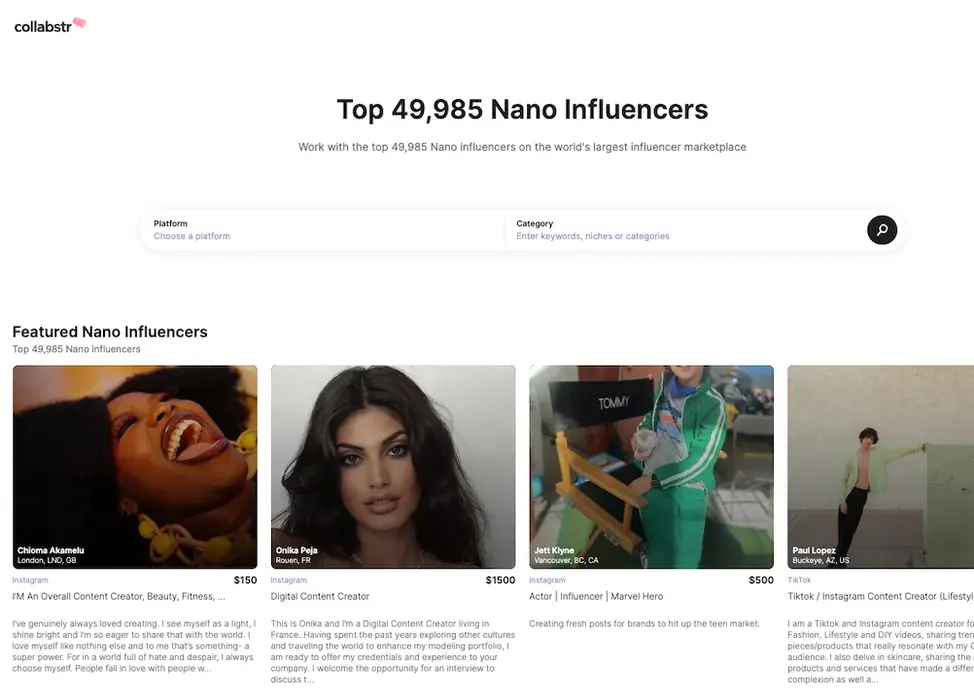
With over 200,000 influencers, Collabstr is a powerful influencer marketing platform designed to connect brands with nano-influencers and other influencer tiers. The platform offers advanced search filters, detailed influencer profiles, and transparent rate sheets that make it easier to understand influencer marketing costs. On Collabstr, you can:
-
Search for Nano-Influencers:
Use targeted filters to find influencers based on follower count, engagement rate, niche, and geographic location. -
Review Influencer Rates:
Access comprehensive rate sheets that provide clear pricing for different types of content, ensuring you know what to expect before negotiating. -
Streamlined Collaboration:
Collabstr’s platform facilitates seamless communication and secure transactions, allowing you to manage your market campaign effectively and confidently.
In addition to using platforms like Collabstr, small brands can also explore nano-influencers through hashtag searches on Instagram, competitor research, and other influencer market hubs. This multi-channel approach helps you build a diverse and cost-effective influencer portfolio.
Frequently Asked Questions
What Is a Good Engagement Rate for a Nano-Influencer?
A strong engagement rate for nano-influencers typically ranges from 5% to 10% or higher. This metric is crucial because even with a lower follower count, high engagement can drive significant ROI and authentic brand interactions.
How Do I Negotiate Rates with a Nano-Influencer?
When negotiating rates, be transparent about your budget and campaign objectives. Use standard influencer marketing rates as a baseline and consider offering additional incentives like free products, affiliate opportunities, or long-term partnerships to sweeten the deal. Always aim for a mutually beneficial arrangement that values the influencer’s creative input and genuine audience connection.
What Should Be Included in a Contract with a Nano-Influencer?
A well-drafted contract should outline all deliverables (e.g., number of Instagram posts, stories, TikTok videos), deadlines, payment terms, usage rights, and any exclusivity clauses. This clarity helps protect both parties and ensures that expectations are met for each piece of sponsored content.
By understanding nano-influencer rates and utilizing transparent rate sheets, small brands can effectively plan and execute cost-efficient influencer marketing campaigns. Whether you’re considering an Instagram post, TikTok video, or YouTube integration, these insights will help you calculate influencer pay accurately and negotiate fair market prices. With tools like Collabstr at your disposal, you can confidently navigate the influencer market, secure authentic partnerships, and maximize the ROI of your market campaign.
Embrace the power of nano-influencers to boost your brand awareness and connect with a highly engaged audience—even on a small budget. Happy collaborating!