How to Measure and Improve Influencer Marketing ROI: 7 Proven Strategies
- Key Takeaways
- 1. Define Clear Campaign Goals
- 2. Track with Attribution Links and Discount Codes
- 3. Calculate Using Revenue vs Campaign Cost
- 4. Factor in Customer Lifetime Value (LTV)
- 5. Measure Incremental Impact
- 6. Choose the Right Influencers and Content
- 7. Use Influencer Marketing Tools to Track and Optimize ROI
- Start driving ROI
- Frequently Asked Questions
Influencer marketing ROI is one of the most important—but hardest—metrics for brands to get right. Knowing how to measure it helps you understand what’s working, what’s not, and where to invest more budget.
This guide breaks down how to track influencer marketing ROI, how to improve it, and what tools can help you track performance across creators, campaigns, and platforms. These seven strategies will help you move from guesswork to a clear, data-driven approach to influencer marketing ROI.
Key Takeaways
-
Tracking influencer ROI requires combining attribution tools like UTMs and discount codes with revenue data for accurate measurement.
-
True ROI goes beyond immediate sales and should include LTV and incrementality to capture full campaign impact.
-
Improving ROI depends on clear goals, the right creator partnerships, and strong tracking systems—not just better reporting tools.
1. Define Clear Campaign Goals
Before you figure out how to track influencer ROI, you need clarity on what success looks like.
Types of influencer campaign goals:
-
Sales-driven campaigns (conversions, revenue)
-
Awareness campaigns (reach, impressions)
-
Engagement campaigns (likes, shares, comments)
-
Growth campaigns (followers, email signups)
Defining goals upfront ensures your ROI measurement aligns with outcomes—not vanity metrics. Each goal should also map to a clear KPI (e.g., revenue, CPM, engagement rate, or CAC) so performance can be measured consistently across campaigns.
2. Track with Attribution Links and Discount Codes
One of the most effective ways to measure influencer ROI is through attribution.
How to do it:
-
Use UTM links for every influencer
-
Assign unique discount codes per creator
-
Track traffic and conversions in analytics tools
This is also key for brands looking for a marketplace to search influencers by engagement rate, since performance tracking helps validate creator quality over time.
3. Calculate Using Revenue vs Campaign Cost
To measure influencer ROI directly, use a simple formula:
ROI = (Revenue – Campaign Cost) / Campaign Cost
Include in your cost calculation:
-
Influencer fees
-
Product seeding or gifting
-
Production + shipping costs
If you’re working with multiple creators, calculating ROI at the individual influencer level is key—aggregating across creators can hide top performers and underperformers.
4. Factor in Customer Lifetime Value (LTV)
Most brands underestimate influencer ROI by only looking at first purchase value, which creates a distorted view of campaign performance.
Why LTV matters:
Customers acquired through influencer campaigns often continue purchasing beyond the initial conversion, meaning ROI compounds over time.
For example, a customer might:
-
Spend $40–$80 on their first purchase
-
Go on to generate $300–$600+ in lifetime value through repeat purchases, subscriptions, or upsells
When viewed this way, campaigns that appear only marginally profitable on a first-sale basis can become highly valuable over time. Incorporate CLV by assigning lifetime value to each influencer-driven cohort and comparing it against creator acquisition cost, rather than individual transactions.

5. Measure Incremental Impact
Incrementality measures the true lift your influencer campaign creates by isolating what wouldn’t have happened without it.
Ways to measure it:
-
Compare performance during campaign vs pre-campaign periods
-
Run geo or audience holdout tests (exposed vs non-exposed groups)
-
Match traffic or sales spikes directly to posting timelines from specific creators
This is one of the most reliable ways to evaluate whether influencer marketing is driving new demand, rather than just capturing existing intent. (Google has a great guide on how to get started here.)
We recommend treating incrementality as an ongoing testing framework—running controlled tests across creators, platforms, and time periods to identify which partnerships consistently generate incremental lift.
6. Choose the Right Influencers and Content
Measuring ROI is only half the equation. You also need to improve it—and that’s where your high ROI influencer marketing tactics come in.
How to drive ROI from influencer content:
-
Focus on engagement quality, not follower count
-
Test different platforms and formats
This is especially relevant for brands exploring platforms for running multi-influencer campaigns or trying to scale efficiently.
Want to check for engagement or fake followers?
Try these free Collabstr tools:
7. Use Influencer Marketing Tools to Track and Optimize ROI
With influencer analytics tools, it’s much easier to track and improve influencer marketing ROI over time. You can see what’s working, and what’s not, in one place.
The most effective influencer marketing tools should include:
-
End-to-end campaign management and tracking, so you can handle creators, content, and performance in one system
-
Performance analytics across campaigns and creators, so you can understand what’s actually driving results
-
Built-in link tracking (UTMs, Bitly, etc.) for accurate attribution and clearer conversion tracking
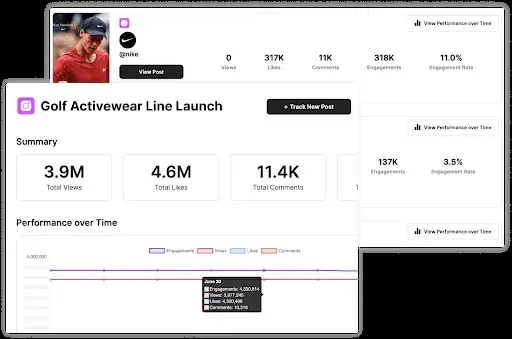
What’s the top influencer marketing software?
The best software for measuring influencer ROI depends on your goals, but most brands need a tool that combines creator discovery, campaign management, and ROI tracking in one place.
Collabstr is a strong option for this, acting as an end-to-end influencer marketplace where brands can find and hire creators across Instagram, TikTok, and YouTube, manage campaigns, and track performance in one self-serve workflow. It removes the need for spreadsheets or multiple disconnected tools, making it easier to test creators and measure ROI quickly.
Unlike more complex enterprise platforms, Collabstr is built for speed and simplicity—helping brands move from creator discovery to campaign execution and performance tracking without friction.
Start driving ROI
Understanding how to measure influencer marketing ROI is only the first step. The real value comes from using those insights to improve campaigns over time.
By combining attribution, LTV, and the right tools, brands can confidently scale influencer marketing while improving efficiency and return.
TL;DR
Influencer marketing ROI improves when you combine clear measurement methods, strong attribution, and ongoing optimization of creators and content. The right tools—like Collabstr—help streamline discovery, campaign management, and performance tracking in one place.

Frequently Asked Questions
How do I hire creators with good engagement?
To hire creators with strong engagement, focus on engagement rate rather than follower count. Review likes, comments, and saves relative to audience size, and prioritize creators whose audiences actively interact with their content. Tools like engagement rate calculators can also help benchmark performance before outreach.
How to find creators that match my brand?
Start by defining your target audience and brand values, then look for creators whose content style, tone, and audience demographics align closely. Reviewing past sponsored content performance and niche relevance is key to ensuring a strong brand fit—not just aesthetic alignment.
What are the best options for influencer marketing tools?
The best influencer marketing tools combine creator discovery, campaign management, and performance tracking. Depending on your needs, this can include end-to-end platforms, analytics tools, and link tracking systems that help measure ROI across campaigns and creators.
Platforms like Collabstr are a strong option for brands looking for an all-in-one workflow, allowing you to discover and hire creators, manage campaigns, and track performance in a single place without needing multiple tools.
How can a startup do influencer marketing?
Startups can begin with micro-influencers, product gifting, or small paid collaborations to test performance without large upfront costs. The key is to focus on clear tracking (links, codes, and attribution) so you can identify which creators and campaigns actually drive ROI and scale from there.