Fitness Influencer Marketing Is Growing, With Brand Searches Up 76% in a Year
- Key Takeaways
- What Is Fitness Influencer Marketing?
- Brand Demand for Fitness Creators Is Growing Fast
- Who the Fitness Creators Are
- What Fitness Brands Buy: Orangetheory's Example
- Fitness Campaign Ideas
- What Fitness Creators Cost
- Health Claims and Disclosure for Fitness Brands
- How to Run a Fitness Influencer Campaign
- What to Put in a Fitness Creator Brief
- What These Figures Can and Cannot Tell You
- What This Means for Fitness Brands
- FAQ
- Methodology
Say a protein bar brand wants three short videos it can run as Instagram ads for an April 1 launch. It posts the campaign in early March and lists the claims creators may make about protein and energy. Brand searches for fitness creators grew 76% in 2025, so a brand that briefs early and clearly has more creators to choose from before launch.
This guide is for fitness, wellness, activewear and supplement brands planning creator campaigns: how fast brand demand for fitness creators is growing, who the creators are, what the health-claim rules mean for you and how to run a campaign.
Key Takeaways
• Brand searches for fitness creators grew 76% in 2025, the third-fastest growth of any niche in Collabstr's 2026 Influencer Marketing Report (Collabstr, 2026).
• Health & Fitness is one of the top three niches for male influencers in Collabstr's 2026 report, at 10%, which helps brands that want to work with male creators.
• Health claims a creator makes about your product count as your claims under the Federal Trade Commission's (FTC) guidance, so they need the same evidence.
What Is Fitness Influencer Marketing?
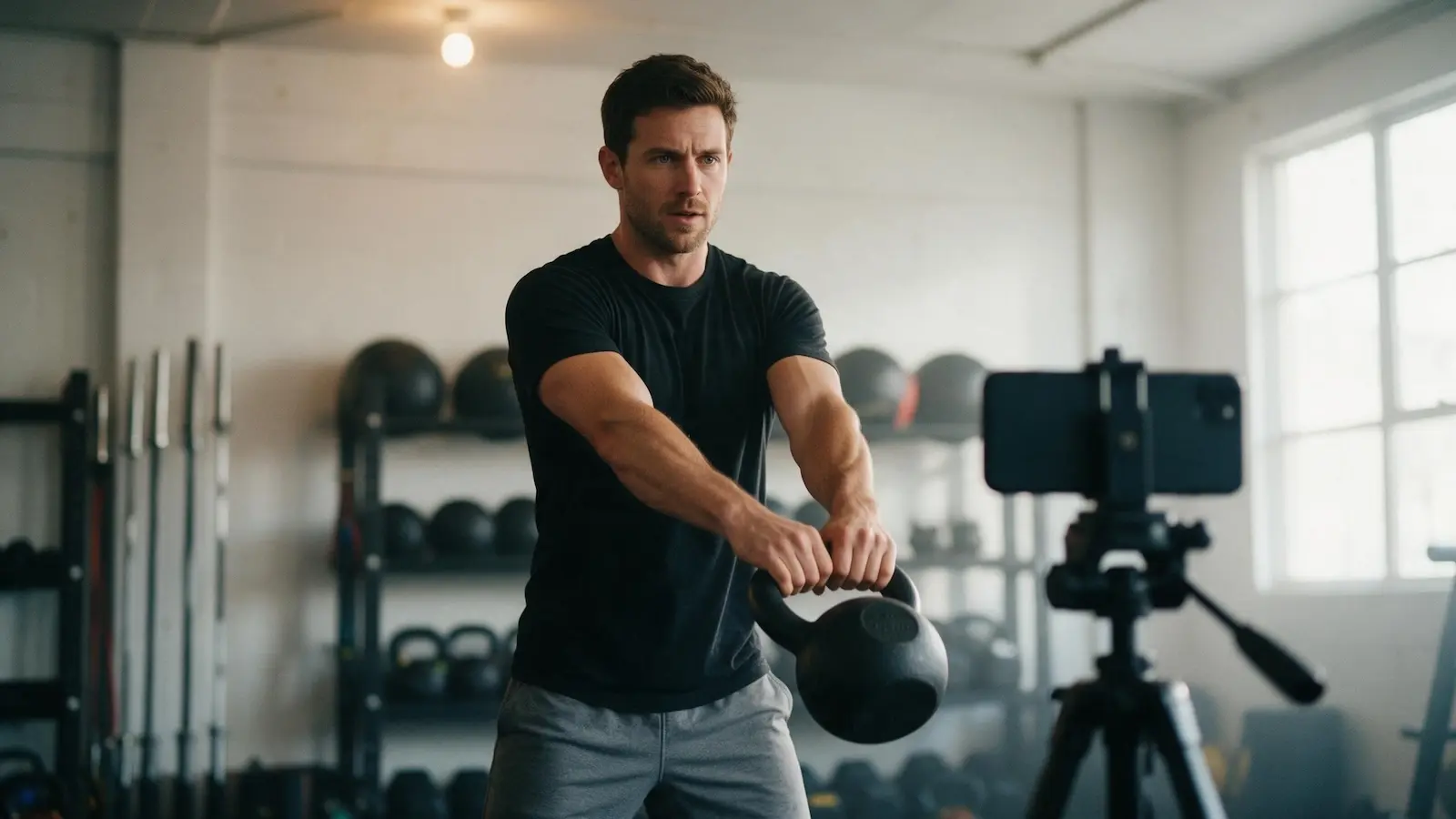
Fitness influencer marketing is a brand paying creators who make fitness and wellness content, such as trainers, athletes and nutrition creators, to promote a product, a service or a membership. The brands range from gyms and studios to activewear, supplements, equipment and fitness apps.
Fitness suits creator marketing because the products work on the body, and buyers need to see them in use. A trainer showing a workout or a runner testing shoes shows the product working, from someone the audience already follows.
Brand Demand for Fitness Creators Is Growing Fast
In Collabstr's 2026 Influencer Marketing Report, brand searches for Health & Fitness creators grew 76% year over year, the third-fastest growth of any niche, behind Athlete & Sports and Skilled Trades (Collabstr, 2026).
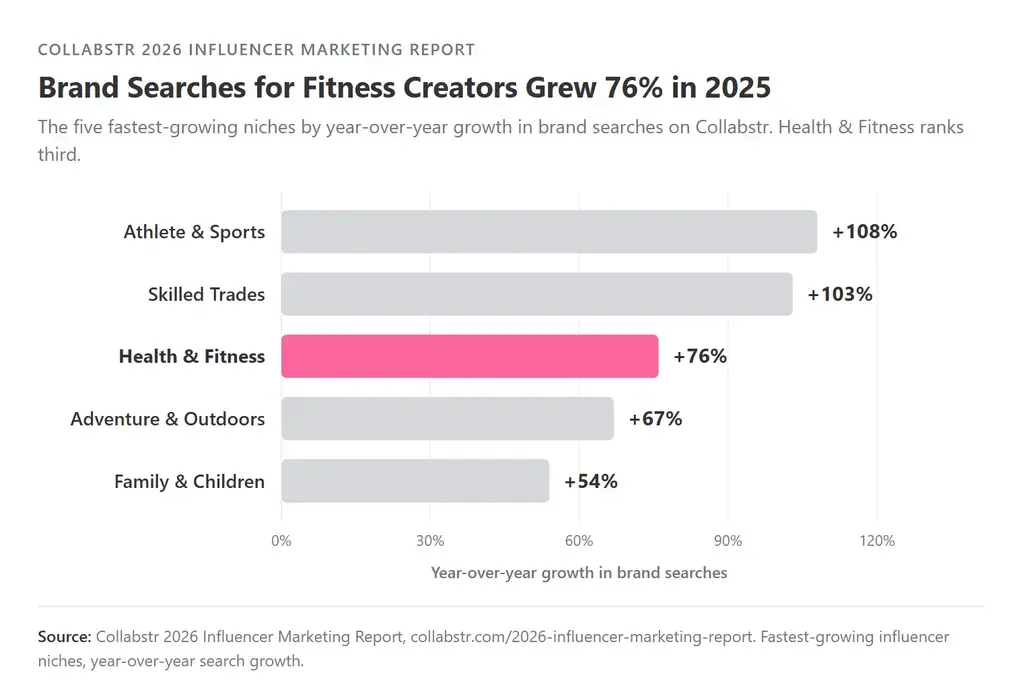
Fitness is also one of the five niches brands search for most, alongside Lifestyle, Beauty, Fashion and Travel, according to the same report.
For a brand, faster-growing demand means more campaigns competing for the same creators. Name the product, the claims creators may make and the deadline in your brief, and post the campaign earlier than you would in a quieter category.
Who the Fitness Creators Are
Fitness is one of the niches male influencers work in most. In Collabstr's 2026 Influencer Marketing Report, Health & Fitness ranks among the top three niches for male influencers, at 10%, alongside Lifestyle at 20% and Comedy & Entertainment at 10%. The top three for female influencers are Lifestyle, Beauty and Fashion.
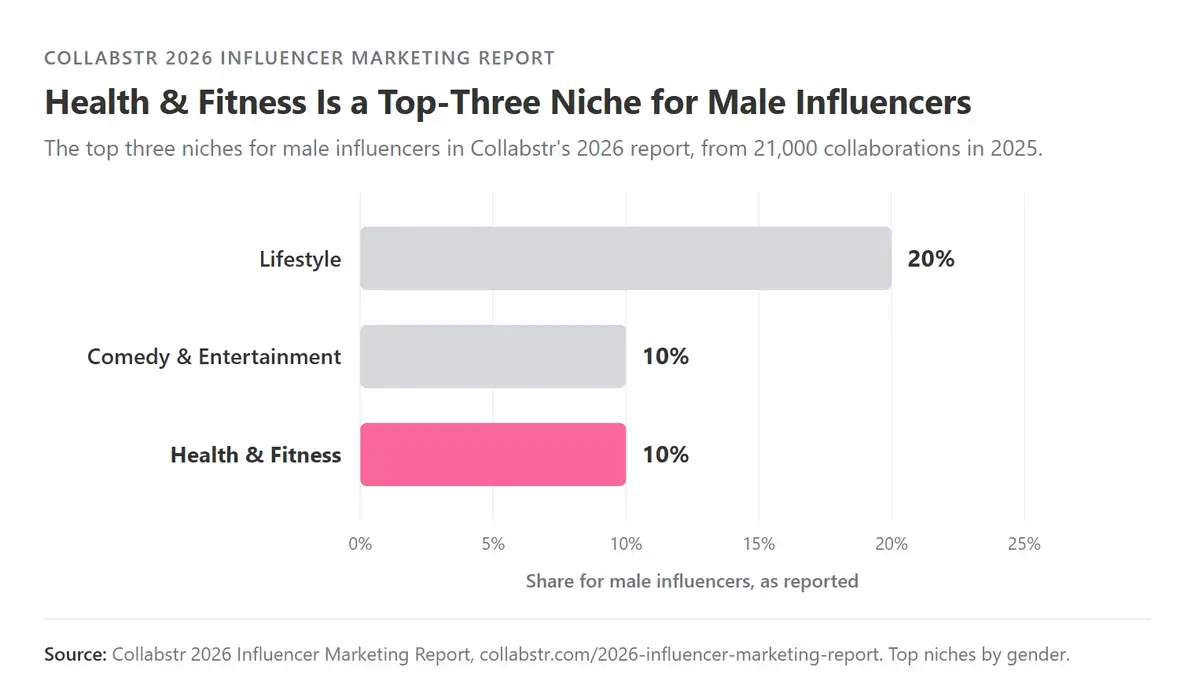
For a brand that wants male creators, fitness is one of the niches where they do the most work on Collabstr.
Fitness creators fall into four types, and each suits a different product:
• Trainers and coaches: workouts, programs, studios and gyms.
• Athletes: performance gear, footwear and sports nutrition.
• Nutrition and wellness creators: supplements, food and recovery products.
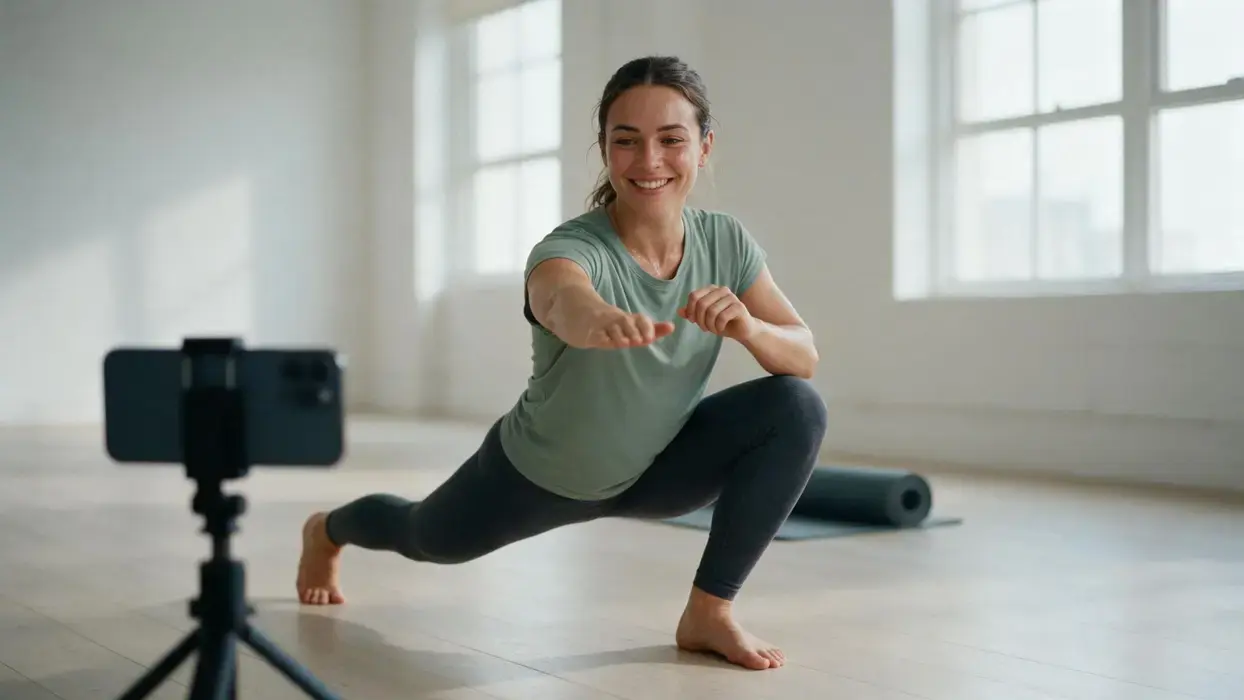
• Yoga and mobility creators: mats, apparel, apps and wellness services.
To browse fitness creators brands work with, see our list of fitness and wellness influencers for brands. Our guide to finding fitness influencers on Instagram covers search filters.
What Fitness Brands Buy: Orangetheory's Example
Fitness brands can buy video to run as their own ads. Orangetheory Fitness, a boutique fitness franchise, ran its program this way on Collabstr. Its brief asked for localized user-generated content (UGC), meaning videos made for the brand to run, for paid ads matched to each studio market (Collabstr).
Across two campaigns, Orangetheory hired 23 creators and received 45 paid-ready videos, which it reused across Meta and other paid channels. Its open campaigns drew 15 to 30 applicants each. Brief for the asset you will run, and agree how long you can use it before the creator films. Our guide to creator marketing covers buying content for ads across all categories.
Fitness Campaign Ideas
Four formats suit fitness campaigns, and each one shows the product in use.
Workouts Built Around the Product
The creator plans a workout that uses your shoes, equipment or apparel and films it. It suits brands whose product only makes sense in motion.
Class and Membership Trials
The creator tries a class, a studio or a fitness app and shows the experience from booking to finish. Give them a code or link for a trial, so you can see who signs up.
Challenges
The creator runs a seven-day or 30-day challenge their followers can join, using your product or app. Frame it around habits, such as showing up each day, rather than promised results.
Routine and Nutrition Content
The creator shows where your snack, drink or supplement fits in their day. The health-claim rules below apply here most of all.
What Fitness Creators Cost
Fitness sits mid-range on price. In Collabstr's 2026 report, Health & Fitness appears in neither the five most expensive niches nor the five most affordable, so typical rates for your platform and creator size are a fair starting point.
Rates vary with the platform, the content and the creator's follower count. To see typical rates before you hire, use the influencer price calculator.
Health Claims and Disclosure for Fitness Brands
A health claim a creator makes about your product counts as your claim, so it needs the same evidence you would need to make it yourself. The FTC's Health Products Compliance Guidance says advertisers "should not make claims through consumer testimonials or expert endorsements" that they could not back up with evidence if they made the claims directly (FTC, 2022).
The bar is high. The same guidance says the FTC "generally requires that health-related claims be backed by competent and reliable scientific evidence". Claims about weight loss, muscle gain or a supplement's benefits can all count as health claims.
Three checks cover the claim and disclosure risks in a fitness campaign:
• Give creators approved claims. Put the exact wording you can support in the brief.
• Flag claims to avoid. Promises of specific results, such as pounds lost in a set time, need strong evidence.
• Require a disclosure. Paying a creator, or giving free product, means the post must say so clearly. Our guide to the FTC influencer guidelines covers labels and placement.
How to Run a Fitness Influencer Campaign
A fitness campaign follows six steps. Two of them, briefing claims and checking creators, need extra care when the product touches health.
1. Set the goal. Decide whether you are buying videos for your own ads, posts on the creator's account, or both.
2. Find and check creators. Look for creators who already use products like yours, and check that their followers are real. Our guide to influencer vetting covers the checks.
3. Pick the creator size. Smaller creators generally cost less per post and suit testing several at once. Larger creators reach more people per post.
4. Brief the claims. Use the seven brief items below, starting with the claims the creator may and may not make.
5. Approve, then pay. On Collabstr, payment is released when you approve the work, so review every claim and the disclosure before you approve (Collabstr).
6. Measure. Judge ad videos on how they perform when you run them, and posts on the views they earn. Our guide to influencer marketing measurement sets out the metrics by goal.
For a longer brand story, see our article on how Gymshark built its business through influencer marketing.
What to Put in a Fitness Creator Brief
A fitness brief adds one item to the usual list: the exact claims the creator may make. Seven items cover most campaigns:
|
Brief item |
What to include |
|---|---|
|
Product and use |
What the product is, and how and when it should appear in the content |
|
Approved claims |
The exact wording you can support with evidence |
|
Claims to avoid |
Results, timeframes and health benefits the creator must not promise |
|
Content |
Each piece of content, its format and length, such as one Reel and three Stories |
|
Dates |
The date for drafts and the date the post goes live |
|
Usage rights |
Where you can run the content and for how long |
|
Disclosure |
The exact label and where it goes |
Our campaign brief template is a starting point.
What These Figures Can and Cannot Tell You
Search growth comes from Collabstr's 2026 report and compares brand searches in 2025 with 2024. The niches by gender come from the same report's analysis of 21,000 collaborations. Both describe Collabstr, a self-serve marketplace, so read them as a pattern in that market.
What This Means for Fitness Brands
Brand searches for fitness creators grew 76% in 2025, and Health & Fitness is one of the top three niches for male influencers. Brief early, pick creators for the videos you need, and get every health claim cleared before the creator films.
FAQ
How Much Do Fitness Influencers Charge?
Fitness sits mid-range: it is in neither the five most expensive nor the five most affordable niches in Collabstr's 2026 report. Rates vary with platform, content and follower count, so check typical rates with the influencer price calculator.
Do Fitness Influencers Need to Disclose Sponsored Posts?
Yes. Paying a creator, or giving free product, is a material connection under the FTC's Endorsement Guides, so the post needs a clear disclosure, such as #ad (Federal Register, 2023). Brands can be liable for misleading or unsupported statements creators make about their products, and for missing disclosures, so check both before you approve.
Can Fitness Influencers Make Health Claims About a Product?
Only claims the brand can back up with evidence. The FTC says advertisers should not make claims through endorsements that they could not substantiate directly, and health claims generally need "competent and reliable scientific evidence" (FTC, 2022).
What Kind of Fitness Campaign Suits a Gym or Studio?
A class or membership trial with local creators. Book creators who live near each location, give each one a trial code, and ask for a video of the class itself. Orangetheory took a similar local approach, matching its ad videos to each studio market.
How Do You Find Fitness Influencers?
Start from the product and the content you need, then look for creators who already use similar products. Our guide to finding fitness influencers on Instagram covers the search filters.
Methodology
• Search growth and most in-demand niches: Collabstr's 2026 Influencer Marketing Report, comparing 2025 with 2024.
• Niches by gender: Collabstr's 2026 Influencer Marketing Report, top niches for male and female influencers across 21,000 collaborations in 2025.
• Orangetheory: Collabstr's published case study.
• Health claims: FTC Health Products Compliance Guidance, December 2022.
• Worked example: the protein bar brand and its launch are hypothetical.